Triethylsilane → 6-(2-Bromo-5-iodo-benzyl)-chroman
Reaction equation

[Br:1][C:2]1[CH:7]=[CH:6][C:5]([I:8])=[CH:4][C:3]=1[C:9]([C:11]1[CH:12]=[C:13]2[C:18](=[CH:19][CH:20]=1)[O:17][CH2:16][CH2:15][CH2:14]2)=O.C([SiH](CC)CC)C>C(#N)C.ClCCl>[Br:1][C:2]1[CH:7]=[CH:6][C:5]([I:8])=[CH:4][C:3]=1[CH2:9][C:11]1[CH:12]=[C:13]2[C:18](=[CH:19][CH:20]=1)[O:17][CH2:16][CH2:15][CH2:14]2Participants
4
Reactant 2
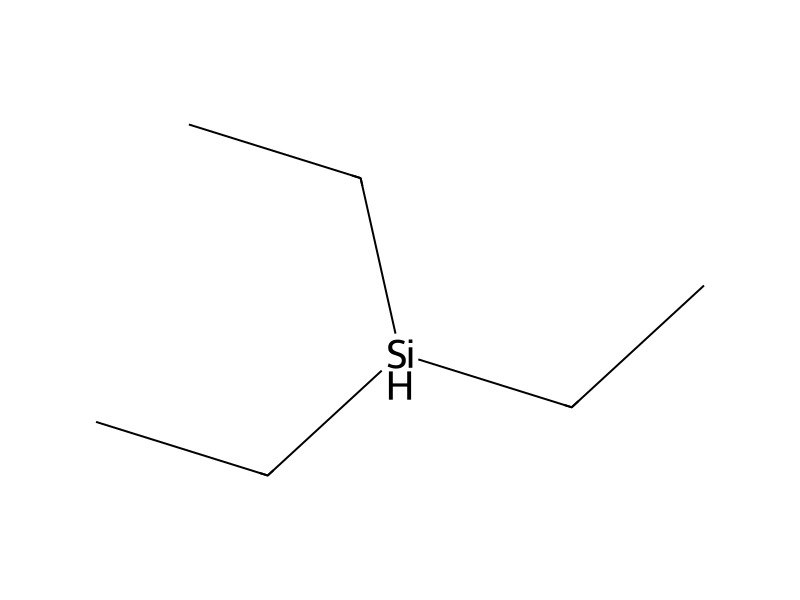

Product 1

Reagents, catalysts & solvents 1

Procedure
To a stirred solution of (2-bromo-5-iodo-phenyl)-chroman-6-yl-methanone (2.0 g, 4.51 mmol) in acetonitrile: dichloromethane (2:1 mixture, 9 mL) was added triethylsilane (2.52 mL, 15.78 mmol) and boron trifluoride diethyl etherate complex 1.11 mL, 9.02 mmol) at 0° C. After stirring overnight at room temperature, reaction was quenched by the addition of saturated aqueous sodium bicarbonate solution. Volatiles were evaporated under reduced pressure. The aqueous layer was extracted with ethyl acetate (2×20 mL). Ethyl acetate layer was washed with water, brine, dried over sodium sulfate, concentrated and purified by silica gel column chromatography to furnish 6-(2-bromo-5-iodo-benzyl)-chroman (1.5 g).
Workup
- customreaction
- customwas quenched by the addition of saturated aqueous sodium bicarbonate solution
- customVolatiles were evaporated under reduced pressure
- extractionThe aqueous layer was extracted with ethyl acetate (2×20 mL)
- washEthyl acetate layer was washed with water, brine
- dry with materialdried over sodium sulfate
- concentrationconcentrated
- custompurified by silica gel column chromatography
Sources & evidence
- ORD record
- ord-be4dfb06f0b54a298f04052f5f31f3af
- Source dataset
- uspto-grants-2014_09
- Patent number
- US08828951B2
Reaction notes
Loading…