Benzoyl chloride, 3-nitro- → 3-Nitro-N-(3-pyridinylmethyl)benzamide
Reaction equation

[N+:1]([C:4]1[CH:5]=[C:6]([CH:10]=[CH:11][CH:12]=1)[C:7](Cl)=[O:8])([O-:3])=[O:2].C(=O)(O)[O-].[Na+].[NH2:18][CH2:19][C:20]1[CH:21]=[N:22][CH:23]=[CH:24][CH:25]=1>C(OCC)C>[N+:1]([C:4]1[CH:5]=[C:6]([CH:10]=[CH:11][CH:12]=1)[C:7]([NH:18][CH2:19][C:20]1[CH:21]=[N:22][CH:23]=[CH:24][CH:25]=1)=[O:8])([O-:3])=[O:2]Participants
5
Reactant 3

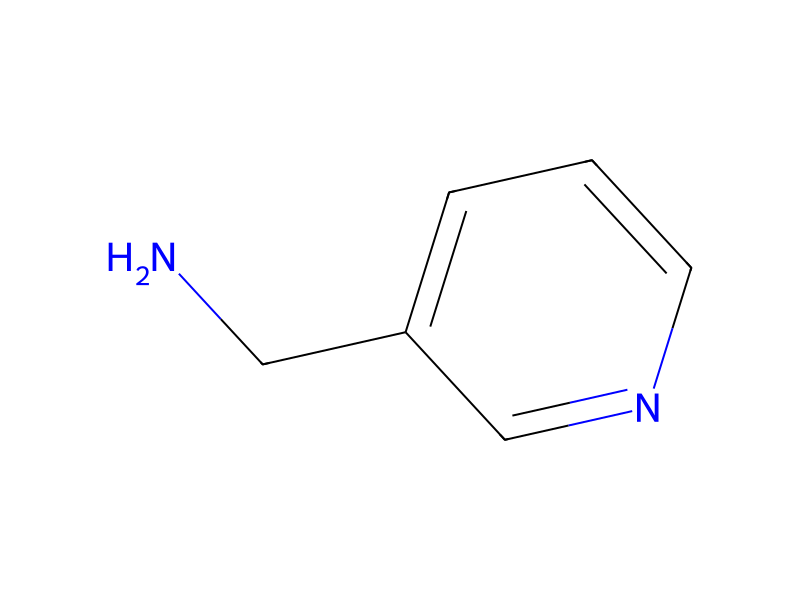

Product 1

Reagents, catalysts & solvents 1

Procedure
To a stirred two-phase solution of 3-nitrobenzoyl chloride (9.3 g) in a mixture of diethyl ether (50 ml) and saturated sodium bicarbonate solution (50 ml) was added 3-aminomethylpyridine (5.4 g) in an ice-cooled bath. The mixture was stirred vigorously at ambient temperature for 30 minutes. The reaction mixture was filtered, and the resulting solid was washed with water. The solid was further solidified with diisopropyl alcohol-water to afford 3-nitro-N-(3-pyridylmethyl)benzamide (5.91 g) as a pale yellow amorphous solid.
Workup
- temperaturecooled bath
- filtrationThe reaction mixture was filtered
- washthe resulting solid was washed with water
Sources & evidence
- ORD record
- ord-2c24600393954196898dcf2e483b9eaa
- Source dataset
- uspto-grants-1998_01
- Patent number
- US05708173
Reaction notes
Loading…