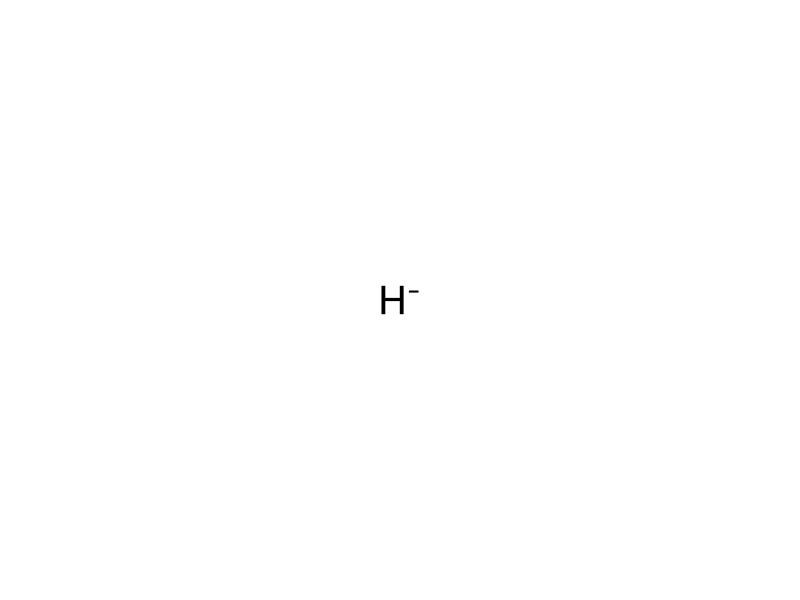
Hydride → HCID 54080473, compound
Reaction equation

Br[C:2]1[CH:3]=[C:4]2[C:12](=[CH:13][CH:14]=1)[N:11]([Si:15]([CH:22](C)C)([CH:19](C)C)[CH:16](C)C)[C:10]1[CH2:9][CH2:8][CH:7]([N:25]([CH3:27])[CH3:26])[CH2:6][C:5]2=1.C([Li])CCC.C1(P([N:47]=[N+]=[N-])(C2C=CC=CC=2)=O)C=CC=CC=1.[H-].COCCO[Al+]OCCOC.[Na+].[H-].[H-].C(O[C:70](=[O:76])[O:71][C:72]([CH3:75])([CH3:74])[CH3:73])(C)(C)C>O1CCCC1>[C:72]([O:71][C:70]([NH:47][C:2]1[CH:3]=[C:4]2[C:12](=[CH:13][CH:14]=1)[N:11]([Si:15]([CH3:16])([CH3:22])[CH3:19])[C:10]1[CH2:9][CH2:8][CH:7]([N:25]([CH3:27])[CH3:26])[CH2:6][C:5]2=1)=[O:76])([CH3:73])([CH3:74])[CH3:75]Participants
Reactant 6



Product 1

Reagents, catalysts & solvents 1

Conditions
- Temperature
- -70 °C
Procedure
To a solution of 0.898 gm (2.0 mMol) 6-bromo-3-(dimethyl)amino-9-triisopropylsilyl-1,2,3,4-tetrahydro-9H-carbazole in 20 mL tetrahydrofuran at -70° C. were added 1.56 mL (2.2 mMol) n-butyllithium (1.41M in hexane). The solution was allowed to stir at this temperature for 45 minutes and then it was siphoned over 15 minutes into a solution of 0.50 mL (2.3 mMol) diphenylphosphoryl azide in 20 mL tetrahydrofuran at -70° C. The wine red solution was maintained at -70° C. for 2 hours at which point the reaction mixture was treated with 2.5 mL (8.9 mMol) sodium bis(2-methoxyethoxy)aluminum hydride (65% in toluene). The reaction mixture was allowed to warm to 0° C. during which time gas evolution was observed and the reaction mixture became pale yellow. After 30 minutes at 0° C. the reaction mixture was allowed to warm to room temperature. After 30 minutes at room temperature the reaction mixture was again cooled to 0° C. and was cautiously treated with ice to decompose excess hydride. The reaction mixture was then filtered to remove the precipitate that had formed and the precipitate was washed thoroughly with diethyl ether. The combined filtrates were washed sequentially with dilute aqueous sodium hydroxide and saturated aqueous sodium chloride, dried over sodium sulfate and concentrated under reduced pressure to a viscous oil. This oil was then dissolved in 10 mL dichloromethane and to it were added 0.50 gm (2.3 mMol) di-(t-butyl)carbonate. The resulting solution was then stirred for 18 hours at room temperature. The reaction mixture was then concentrated under reduced pressure. The residue was then dissolved in toluene and concentrated under reduced pressure to remove and residual t-butanol. The residue was then subjected to column chromatography, eluting with a gradient of chloroform (2-8% 95:5 methanol:ammonium hydroxide) to give 0.45 gm (46%) of the desired compound as a colorless glass.
Workup
- temperatureto warm to 0° C. during which time gas evolution
- waitAfter 30 minutes at 0° C. the reaction mixture was allowed
- temperatureto warm to room temperature
- temperatureAfter 30 minutes at room temperature the reaction mixture was again cooled to 0° C.
- additionwas cautiously treated with ice
- filtrationThe reaction mixture was then filtered
- customto remove the precipitate that
- customhad formed
- washthe precipitate was washed thoroughly with diethyl ether
- washThe combined filtrates were washed sequentially with dilute aqueous sodium hydroxide and saturated aqueous sodium chloride
- dry with materialdried over sodium sulfate
- concentrationconcentrated under reduced pressure to a viscous oil
- dissolutionThis oil was then dissolved in 10 mL dichloromethane and to it
- stirringThe resulting solution was then stirred for 18 hours at room temperature
- concentrationThe reaction mixture was then concentrated under reduced pressure
- dissolutionThe residue was then dissolved in toluene
- concentrationconcentrated under reduced pressure
- customto remove
- washeluting with a gradient of chloroform (2-8% 95:5 methanol:ammonium hydroxide)
Sources & evidence
- ORD record
- ord-e0327db763534518873e48be157f4e15
- Source dataset
- uspto-grants-1998_01
- Patent number
- US05708187
Reaction notes
Loading…