Ethylene Glycol → 2-[(4-bromophenyl)methyl]-1,3-dioxolane
Reaction equation

[Br:1][C:2]1[CH:7]=[CH:6][C:5]([CH2:8][CH:9]=[O:10])=[CH:4][CH:3]=1.[CH2:11](O)[CH2:12][OH:13].O>C1(C)C=CC=CC=1.O.C1(C)C=CC(S(O)(=O)=O)=CC=1>[Br:1][C:2]1[CH:7]=[CH:6][C:5]([CH2:8][CH:9]2[O:13][CH2:12][CH2:11][O:10]2)=[CH:4][CH:3]=1Participants
6





Procedure
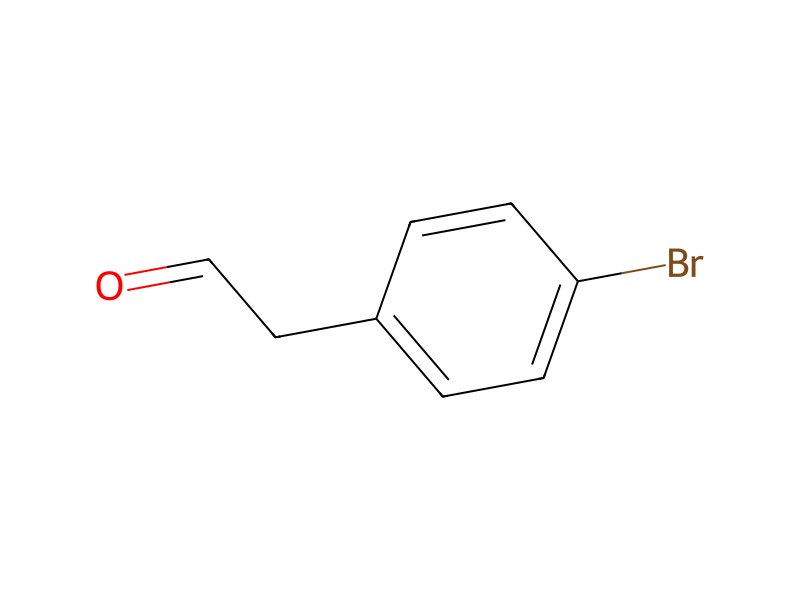
A solution of 4-bromophenylacetaldehyde from Step 1 (44.5 g, 224 mmol), ethylene glycol (13.7 mL, 246 mmol) and p-toluenesulfonic acid monohydrate (85 mg, 0.45 mmol) in toluene (300 mL) was refluxed for 3 h with concomitant Dean-Stark water trapping. The reaction mixture was then washed successively with 5% aqueous NaHCO3 (2×), water and brine, dried (MgSO4) and concentrated. The residue was distilled under reduced pressure (bp 110°-115° C./0.5 mmHg) to afford the title compound as a colorless liquid (30.0 g, 55%).
Workup
- washThe reaction mixture was then washed successively with 5% aqueous NaHCO3 (2×), water and brine
- dry with materialdried (MgSO4)
- concentrationconcentrated
- distillationThe residue was distilled under reduced pressure (bp 110°-115° C./0.5 mmHg)
Sources & evidence
- ORD record
- ord-9b26067e086e4aeb8401cd00702b417a
- Source dataset
- uspto-grants-1998_01
- Patent number
- US05710170
Reaction notes
Loading…