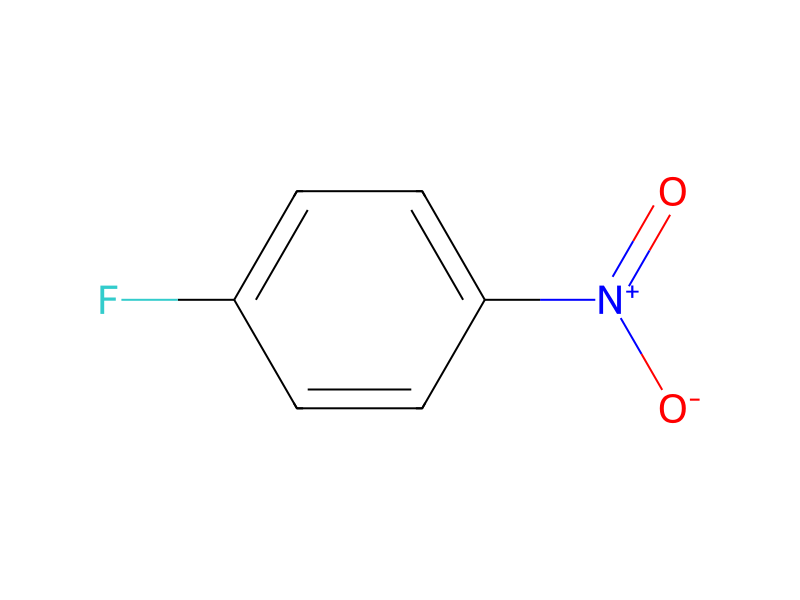
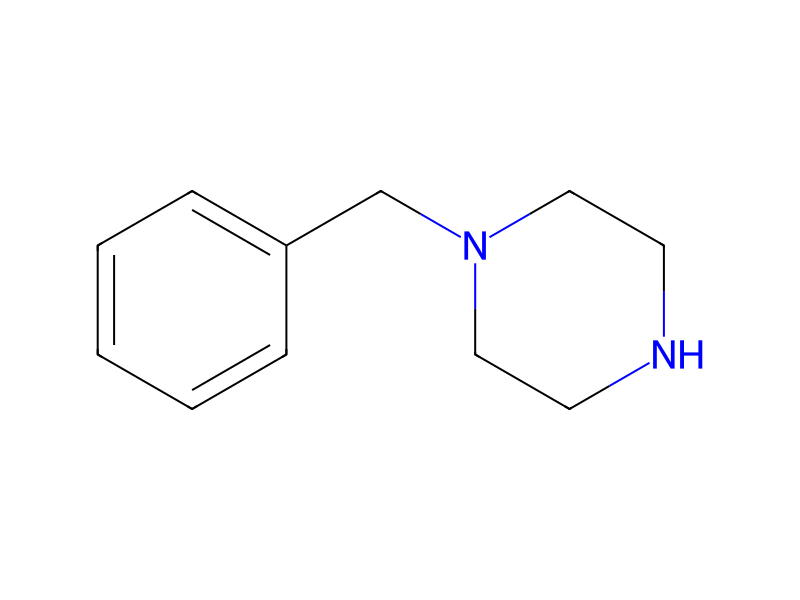
p-Fluoronitrobenzene → 1-Benzyl-4-(4-nitrophenyl)piperazine
Reaction equation

F[C:2]1[CH:7]=[CH:6][C:5]([N+:8]([O-:10])=[O:9])=[CH:4][CH:3]=1.[CH2:11]([N:18]1[CH2:23][CH2:22][NH:21][CH2:20][CH2:19]1)[C:12]1[CH:17]=[CH:16][CH:15]=[CH:14][CH:13]=1.C(=O)([O-])[O-].[K+].[K+]>C(#N)C.C(Cl)Cl>[N+:8]([C:5]1[CH:6]=[CH:7][C:2]([N:21]2[CH2:22][CH2:23][N:18]([CH2:11][C:12]3[CH:13]=[CH:14][CH:15]=[CH:16][CH:17]=3)[CH2:19][CH2:20]2)=[CH:3][CH:4]=1)([O-:10])=[O:9]Participants
6
Reactant 3

Product 1

Reagents, catalysts & solvents 2


Procedure
Reflux a mixture of 53.5 mL (0.504 mol) of 1-fluoro-4-nitrobenzene, 99.14 g(0.555 mol) of 1-benzylpiperazine, and 76.7 g (0.555 mol) potassium carbonate in acetonitrile for about 17 h. Cool the mixture to room temperature and dilute with methylene chloride and filter. Concentrate thefiltrate in vacuo. Dissolve the residue in methylene chloride and wash withwater. Dry the organic layer with anhydrous sodium sulfate and concentrate in vacuo to give the title compound. NMR (DMSO-d6): δ=2.59(t,4),3.42(t,4), 3.57(s,2), 6.80(d,2) 7.34(m,5) and 8.11(d,2) ppm.
Workup
- temperatureReflux
- filtrationfilter
- concentrationConcentrate
- dissolutionDissolve the residue in methylene chloride
- washwash withwater
- dry with materialDry the organic layer with anhydrous sodium sulfate
- concentrationconcentrate in vacuo
Sources & evidence
- ORD record
- ord-825d4406ae1e4fd48ff47cfccaa05e6e
- Source dataset
- uspto-grants-1991_09
- Patent number
- US05051423
Reaction notes
Loading…