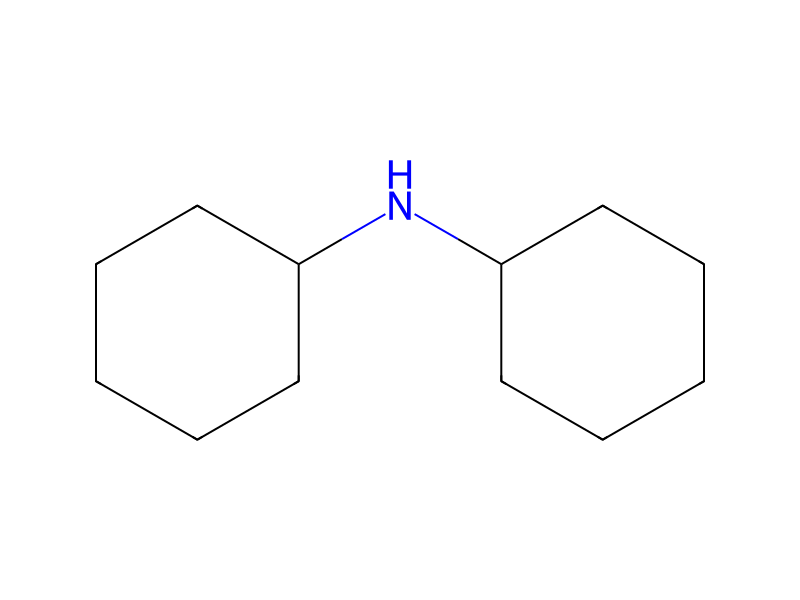
Dicyclohexylamine → HCID 57883837, compound
Reaction equation

C1(N(C2CCCC2)[C:7]([NH:9][C:10]2[S:11][CH:12]=[CH:13][N:14]=2)=[O:8])CCCC1.[CH:20]1([NH:26][CH:27]2[CH2:32][CH2:31][CH2:30][CH2:29][CH2:28]2)[CH2:25][CH2:24][CH2:23][CH2:22][CH2:21]1.C(N1C=CN=C1)(N1C=CN=C1)=O.NC1SC=C([CH2:51][C:52]([O:54][CH2:55][CH3:56])=[O:53])N=1>>[CH2:55]([O:54][C:52](=[O:53])[CH2:51][C:13]1[N:14]=[C:10]([NH:9][C:7]([N:26]([CH:20]2[CH2:21][CH2:22][CH2:23][CH2:24][CH2:25]2)[CH:27]2[CH2:28][CH2:29][CH2:30][CH2:31][CH2:32]2)=[O:8])[S:11][CH:12]=1)[CH3:56]Participants
5


Procedure
[2-(3,3-Dicyclohexyl-ureido)-thiazol-4-yl]-acetic acid ethyl ester was prepared in an similar manner to the synthesis of 1,1-dicyclopentyl-3-thiazol-2-yl-urea, using dicyclohexylamine, carbonyldiimidazole and ethyl 2-amino-4-thiazole acetate.
Sources & evidence
- ORD record
- ord-d22d9157a9b84814a0fcfc73201bbe60
- Source dataset
- uspto-grants-2009_09
- Patent number
- US07582769B2
Reaction notes
Loading…