2-Bromobenzyl bromide → Tert-butyl 4-(2-bromobenzyl)piperazine-1-carboxylate
Reaction equation

[N:1]1([C:7]([O:9][C:10]([CH3:13])([CH3:12])[CH3:11])=[O:8])[CH2:6][CH2:5][NH:4][CH2:3][CH2:2]1.C(N(C(C)C)CC)(C)C.[Br:23][C:24]1[CH:31]=[CH:30][CH:29]=[CH:28][C:25]=1[CH2:26]Br>C(#N)C>[Br:23][C:24]1[CH:31]=[CH:30][CH:29]=[CH:28][C:25]=1[CH2:26][N:4]1[CH2:5][CH2:6][N:1]([C:7]([O:9][C:10]([CH3:13])([CH3:12])[CH3:11])=[O:8])[CH2:2][CH2:3]1Participants
5
Reactant 3
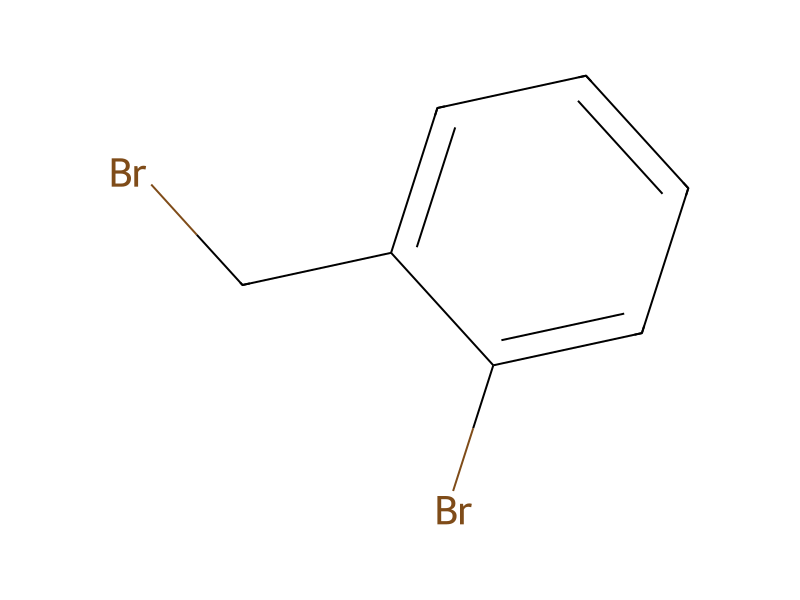


Product 1

Reagents, catalysts & solvents 1

Procedure
A solution of tert-butyl 1-piperazinecarboxylate (5.51 g, 29.623 mmol) in acetonitrile (60 mL) at 0° C. was treated with diisopropylethylamine and 2-bromobenzyl bromide (7.776 g, 31.105 mmol), warmed to room temperature, stirred for 2 hours, and concentrated. The residue was partitioned between ethyl acetate and aqueous NaHCO3. The aqueous layer was extracted with ethyl acetate and the combined extracts were dried (MgSO4), filtered, and concentrated. The concentrate was used directly in the next step without further purification.
Workup
- concentrationconcentrated
- customThe residue was partitioned between ethyl acetate and aqueous NaHCO3
- extractionThe aqueous layer was extracted with ethyl acetate
- dry with materialthe combined extracts were dried (MgSO4)
- filtrationfiltered
- concentrationconcentrated
- customThe concentrate was used directly in the next step without further purification
Sources & evidence
- ORD record
- ord-9a796408c7324664a105b8aedfeab023
- Source dataset
- uspto-grants-2009_09
- Patent number
- US07585858B2
Reaction notes
Loading…