Hydrogen Bromide → 2-(5-Cyclopropyl-3-phenyl-isoxazol-4-yl)-imidazo[1,2-a]pyridine
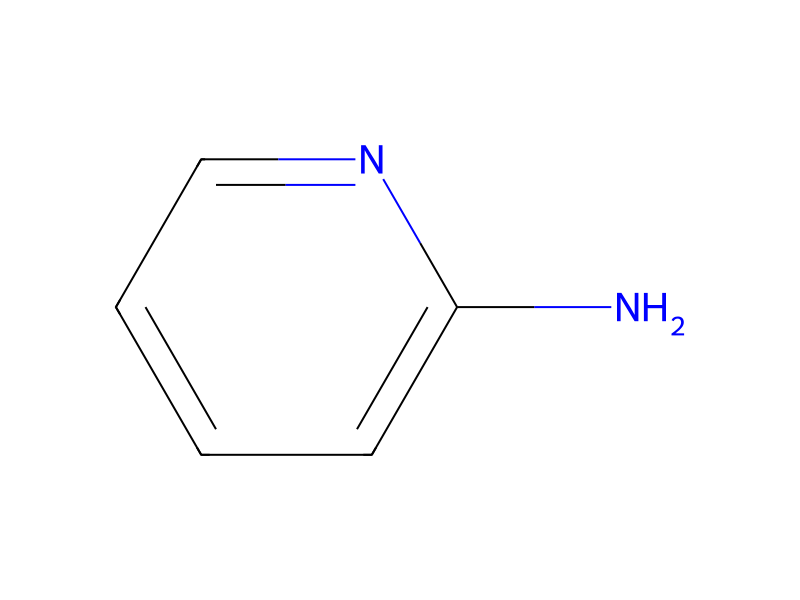
Reaction equation

Br[CH2:2][C:3]([C:5]1[C:6]([C:13]2[CH:18]=[CH:17][CH:16]=[CH:15][CH:14]=2)=[N:7][O:8][C:9]=1[CH:10]1[CH2:12][CH2:11]1)=O.[NH2:19][C:20]1[CH:25]=[CH:24][CH:23]=[CH:22][N:21]=1.Br>C(O)C>[CH:10]1([C:9]2[O:8][N:7]=[C:6]([C:13]3[CH:18]=[CH:17][CH:16]=[CH:15][CH:14]=3)[C:5]=2[C:3]2[N:19]=[C:20]3[CH:25]=[CH:24][CH:23]=[CH:22][N:21]3[CH:2]=2)[CH2:12][CH2:11]1Participants




Procedure
A mixture of 2-bromo-1-(5-cyclopropyl-3-phenyl-isoxazol-4-yl)-ethanone (91.8mg, 0.3 mmol) and 2-aminopyridine (28.2 mg, 0.3 mmol) in ethanol (2 mL) containing hydrobromic acid (48%, 16.9 μL, 0.8 mmol) was heated under reflux under argon for 2 h. Another portion of 2-aminopyridine (28.2 mg, 0.3 mmol) was added and heating continued under reflux under argon for 1 h. After cooling to room temperature, the mixture was evaporated and poured onto saturated sodium hydrogen carbonate and extracted with ethyl acetate. The combined organic layers were then washed with water and brine, dried over sodium sulphate and evaporated to leave a yellow oil. Purification by chromatography (SiO2, heptane:ethyl acetate: 100:0 to 50:50) afforded the title compound (49 mg, 54%) which was obtained as an off-white solid. MS: m/e=302.1 [M+H]+.
Workup
- temperaturewas heated
- temperatureunder reflux under argon for 2 h
- temperatureheating
- temperatureunder reflux under argon for 1 h
- customthe mixture was evaporated
- additionpoured onto saturated sodium hydrogen carbonate
- extractionextracted with ethyl acetate
- washThe combined organic layers were then washed with water and brine
- dry with materialdried over sodium sulphate
- customevaporated
- customto leave a yellow oil
- customPurification by chromatography (SiO2, heptane:ethyl acetate: 100:0 to 50:50)
Sources & evidence
- ORD record
- ord-f73ad2ea70054f498472de732f927c98
- Source dataset
- uspto-grants-2009_09
- Patent number
- US07585874B2
Reaction notes
Loading…