Hydrochloric Acid → N-[2-(chloromethyl)-4-cyanophenyl]-2,2,2-trifluoroacetamide
Reaction equation

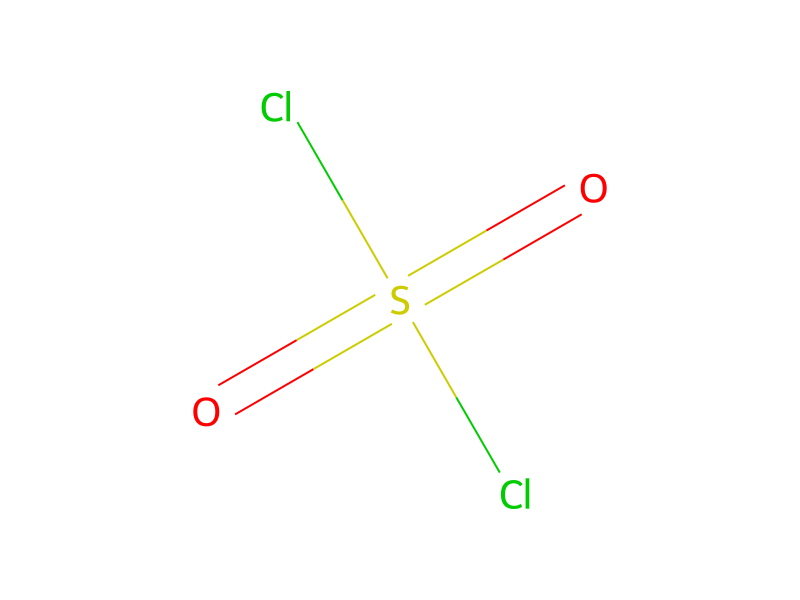
[C:1]([C:3]1[CH:8]=[CH:7][C:6]([NH:9][C:10](=[O:15])[C:11]([F:14])([F:13])[F:12])=[C:5]([CH3:16])[CH:4]=1)#[N:2].S(Cl)([Cl:20])(=O)=O.Cl>C(Cl)(Cl)(Cl)Cl>[Cl:20][CH2:16][C:5]1[CH:4]=[C:3]([C:1]#[N:2])[CH:8]=[CH:7][C:6]=1[NH:9][C:10](=[O:15])[C:11]([F:13])([F:12])[F:14]Participants
Reactant 3


Product 1

Reagents, catalysts & solvents 1

Procedure
In a round-bottomed flask N-(4-cyano-2-methylphenyl)-2,2,2-trifluoroacetamide (Intermediate 1, 19.37 g, 85 mmol), sulfuryl dichloride (27.6 ml, 340 mmol) and diphenylperoxyanhydride (1.028 g, 4.24 mmol) were heated in carbon tetrachloride (210 ml) at 100° C. for 3 h. The mixture was cooled to room temperature and then the reaction mixture was poured into 2M HCl (350 mL). The organic layer was then collected and the solvent was removed to give N-[2-(chloromethyl)-4-cyanophenyl]-2,2,2-trifluoroacetamide as an orange oil, (25.54 g) which was used in the next step without further purification. This oil was added to triphenylphosphine (26.2 g, 100 mmol) and the mixture was heated in toluene (300 ml) at 110° C. for 3 h. The mixture was cooled to room temperature overnight and the precipitate was filtered and washed with small amounts of toluene and diethyl ether to give the title compound as an off-white solid (29.91 g);
Workup
- customThe organic layer was then collected
- customthe solvent was removed
Sources & evidence
- ORD record
- ord-e48d3aef996d4475a829b72cff30e5b4
- Source dataset
- uspto-grants-2014_09
- Patent number
- US08829031B2
Reaction notes
Loading…