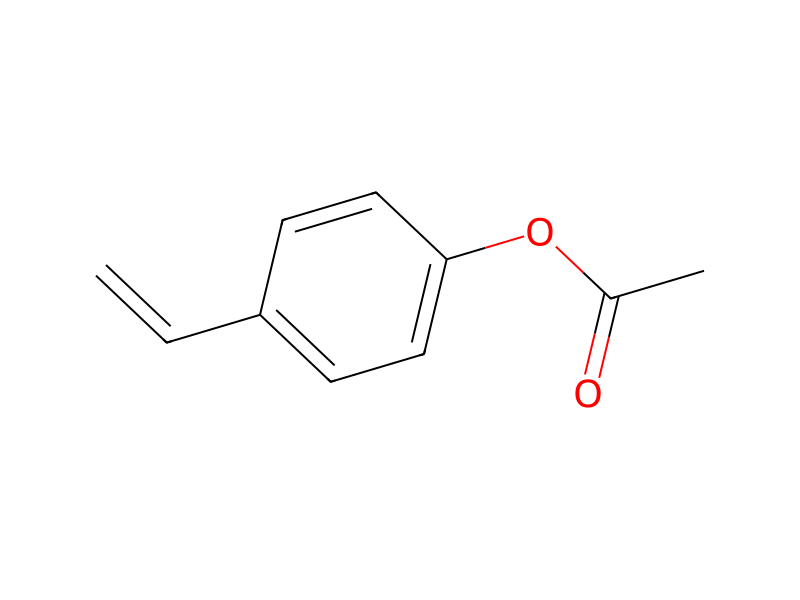
Acetic Anhydride → 4-Ethenylphenyl acetate
Reaction equation

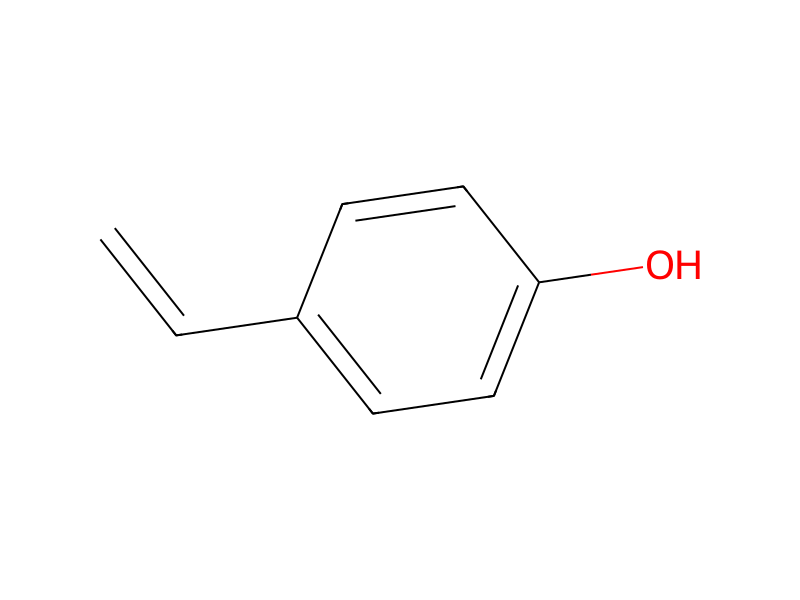
[CH:1]([C:3]1[CH:8]=[CH:7][C:6]([OH:9])=[CH:5][CH:4]=1)=[CH2:2].[C:10](OC(=O)C)(=[O:12])[CH3:11].[OH-].[Na+].[OH-].[K+]>>[C:10]([O:9][C:6]1[CH:7]=[CH:8][C:3]([CH:1]=[CH2:2])=[CH:4][CH:5]=1)(=[O:12])[CH3:11]Participants
5



Procedure
Pittet et al. in U.S. Pat. No. 4,316,995 describe a method for preparing p-vinylphenol. In that method, p-hydroxybenzaldehyde is first reacted with malonic acid using ethylenediamine as catalyst to give pHCA, which is decarboxylated in situ at a temperature of 115 to 120° C. to form impure p-vinylphenol. The p-vinylphenol is isolated from the reaction mixture and reacted with acetic anhydride in the presence of a base, such as sodium hydroxide or potassium hydroxide, to form 4-acetoxystyrene, which is separated from the reaction mixture and hydrolyzed in the presence of a strong base to give purified p-vinylphenol. The yield of 4-vinylphenol was about 31%.
Sources & evidence
- ORD record
- ord-4d6d46b429094c3db124255ce9d114b8
- Source dataset
- uspto-grants-2009_09
- Patent number
- US07586013B2
Reaction notes
Loading…