Isobutyric Acid → O-(1-Isobutanoyloxyisobutoxy) S-Methyl Thiocarbonate
Reaction equation

[C:1]([O-:6])(=[O:5])[CH:2]([CH3:4])[CH3:3].C[N+](C)(C)C.C(O)(=O)C(C)C.[C:18](=[O:28])([S:26][CH3:27])[O:19][O:20][CH:21](Cl)[CH:22]([CH3:24])[CH3:23]>CCOC(C)=O>[C:18](=[O:28])([S:26][CH3:27])[O:19][O:20][CH:21]([O:6][C:1](=[O:5])[CH:2]([CH3:4])[CH3:3])[CH:22]([CH3:24])[CH3:23]Participants
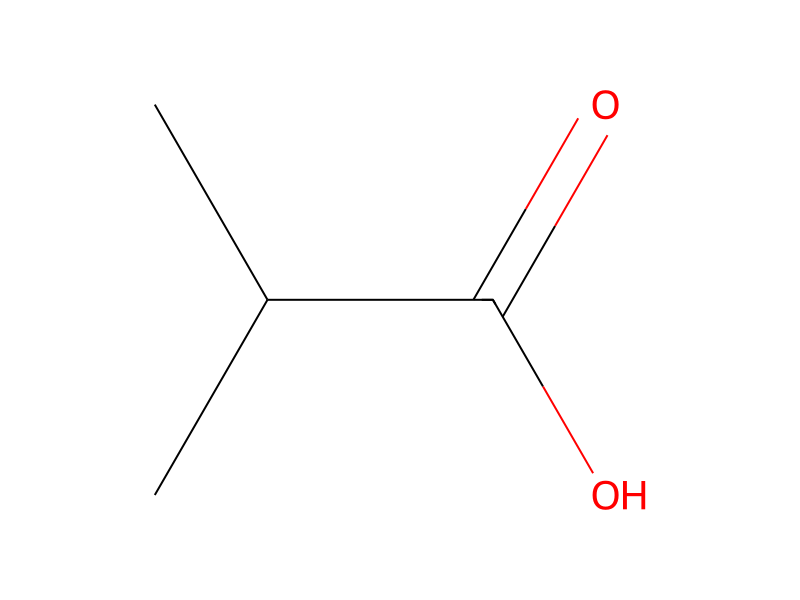



Conditions
- Temperature
- 80 °C
Procedure
In a third step (Step C), to a 3 L three neck round bottom flask equipped with a mechanical stirrer and Teflon-coated thermocouple was added compound (13) (1672 g, 9 mol), isobutyric acid (264 g, 1.5 mol), and compound (12) (1050 g, 5.76 mol). The reaction mixture was heated to 80° C. for 12 h, monitoring the reaction progress by 1H NMR. The reaction mixture was cooled to 20° C., diluted with EtOAc (1 L) and washed with water (2×1 L), saturated NaHCO3 (1×2 L) and water (1 L). The organic phase was separated and concentrated under reduced pressure to afford O-(1-isobutanoyloxyisobutoxy) S-methyl thiocarbonate (11) (905 g, 3.9 mol, 65%) as a colorless liquid. 1H NMR (CDCl3, 400 MHz): δ 1.0 (d, 6H), 1.2 (dd, 6H), 2.05 (m, 1H), 2.35 (s, 3H), 2.6 (m, 1H), 6.7 (d, 1H).
Workup
- temperatureThe reaction mixture was cooled to 20° C.
- washwashed with water (2×1 L), saturated NaHCO3 (1×2 L) and water (1 L)
- customThe organic phase was separated
- concentrationconcentrated under reduced pressure
Sources & evidence
- ORD record
- ord-9d6308163841473396a7e8257dcb9d5f
- Source dataset
- uspto-grants-2009_09
- Patent number
- US07585996B2
Reaction notes
Loading…