Triethylamine → 2-(1,2-Diphenyl-ethyl)-morpholine-4-carboxylic acid benzyl ester
Reaction equation

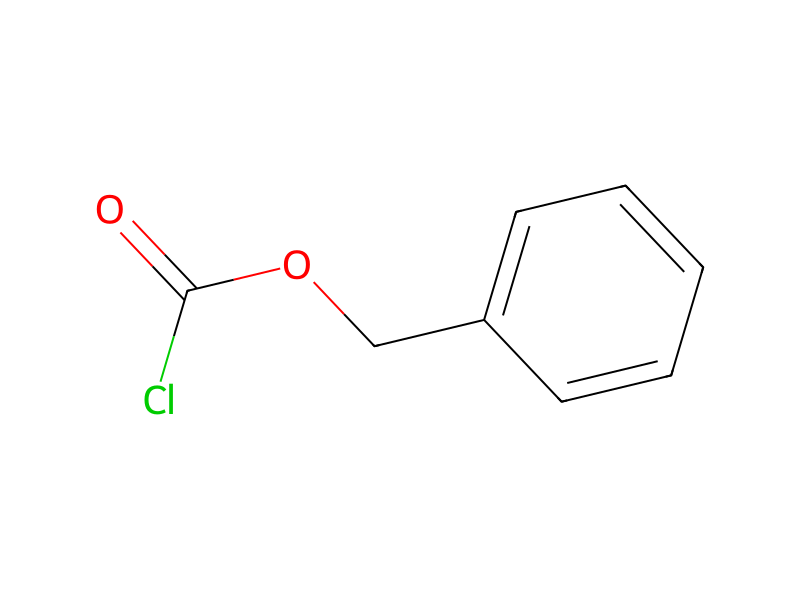
[C:1]1([CH:7]([CH:15]2[O:20][CH2:19][CH2:18][NH:17][CH2:16]2)[CH2:8][C:9]2[CH:14]=[CH:13][CH:12]=[CH:11][CH:10]=2)[CH:6]=[CH:5][CH:4]=[CH:3][CH:2]=1.C(N(CC)CC)C.Cl[C:29]([O:31][CH2:32][C:33]1[CH:38]=[CH:37][CH:36]=[CH:35][CH:34]=1)=[O:30]>ClCCl>[CH2:32]([O:31][C:29]([N:17]1[CH2:18][CH2:19][O:20][CH:15]([CH:7]([C:1]2[CH:6]=[CH:5][CH:4]=[CH:3][CH:2]=2)[CH2:8][C:9]2[CH:14]=[CH:13][CH:12]=[CH:11][CH:10]=2)[CH2:16]1)=[O:30])[C:33]1[CH:38]=[CH:37][CH:36]=[CH:35][CH:34]=1Participants




Procedure
To a solution of 2-(1,2-Diphenyl-ethyl)-morpholine (2 g, 7.49 mmol) in dry dichloromethane (15 ml) at 0° C. under nitrogen atmosphere is added neat triethylamine (2.2 ml, 15.5 mmol, 2.07 equiv.) followed by the addition of neat benzyl chloroformate (1.61 ml, 11.23 mmol, 1.5 equiv.). The reaction is left to reach room temperature over 24 hours and then quenched by addition of a saturated bicarbonate (NaHCO3) aqueous solution. The resulting mixture is extracted with dichloromethane and the resulting organic phases are mixed, dried (MgSO4) and concentrated under reduced pressure to give an oil containing the four possible diastereoisomers (2.3 g, 78%). The diastereoisomers are separated using preparative HPLC, followed by each single enantiomer being resolved by preparative chiral HPLC.
Workup
- waitThe reaction is left
- customquenched by addition of a saturated bicarbonate (NaHCO3) aqueous solution
- extractionThe resulting mixture is extracted with dichloromethane
- additionthe resulting organic phases are mixed
- dry with materialdried (MgSO4)
- concentrationconcentrated under reduced pressure
- customto give an oil
- additioncontaining the four possible diastereoisomers (2.3 g, 78%)
- customThe diastereoisomers are separated
Sources & evidence
- ORD record
- ord-e6c2da69357b4339931f4d4e73ec1a7f
- Source dataset
- uspto-grants-2009_09
- Patent number
- US07595315B2
Reaction notes
Loading…