Water → 2-(4-Isoproylamino-3-nitrophenyl)benzoxazole
Reaction equation

F[C:2]1[CH:7]=[CH:6][C:5]([C:8]2[O:9][C:10]3[CH:16]=[CH:15][CH:14]=[CH:13][C:11]=3[N:12]=2)=[CH:4][C:3]=1[N+:17]([O-:19])=[O:18].C(=O)([O-])[O-].[K+].[K+].[CH:26]([NH2:29])([CH3:28])[CH3:27].O>C(O)C>[CH:26]([NH:29][C:2]1[CH:7]=[CH:6][C:5]([C:8]2[O:9][C:10]3[CH:16]=[CH:15][CH:14]=[CH:13][C:11]=3[N:12]=2)=[CH:4][C:3]=1[N+:17]([O-:19])=[O:18])([CH3:28])[CH3:27]Participants
6
Reactant 4



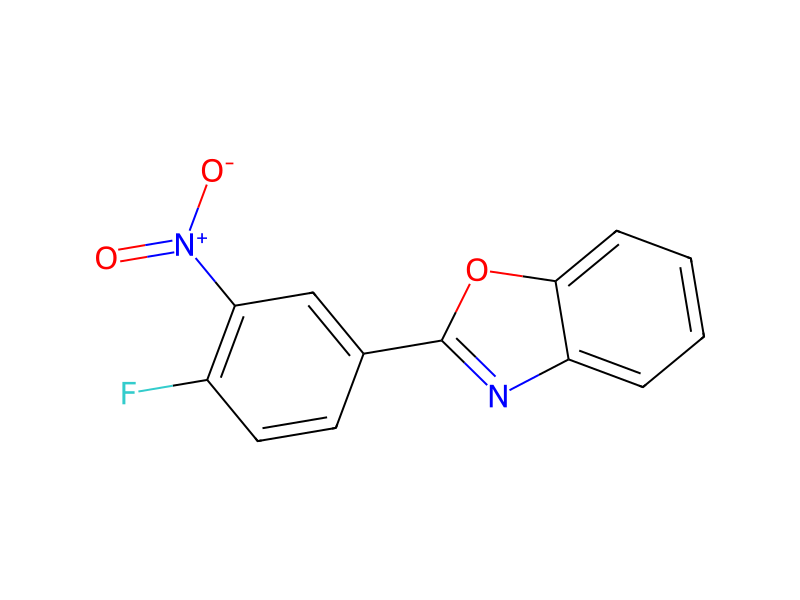
Product 1

Reagents, catalysts & solvents 1

Procedure
To a suspension of 2-(4-fluoro-3-nitrophenyl)benzoxazole (see Working Example 15-2) (200 mg, 0.774 mmol) in ethanol (5 mL) was added potassium carbonate (214 mg, 1.55 mmol) and isopropylamine (137 mg, 2.32 mmol), and this was heated to reflux for 4 hours. After the reaction was complete, this was cooled to room temperature, water was added, and after the precipitated crystals were filtered and washed with water, they were dried to yield the title compound (227 mg, 99% yield).
Workup
- temperaturethis was heated
- temperatureto reflux for 4 hours
- filtrationafter the precipitated crystals were filtered
- washwashed with water, they
- customwere dried
Sources & evidence
- ORD record
- ord-a2f6c3f195c14ad9a52e22956408c4a6
- Source dataset
- uspto-grants-2014_09
- Patent number
- US08829035B2
Reaction notes
Loading…