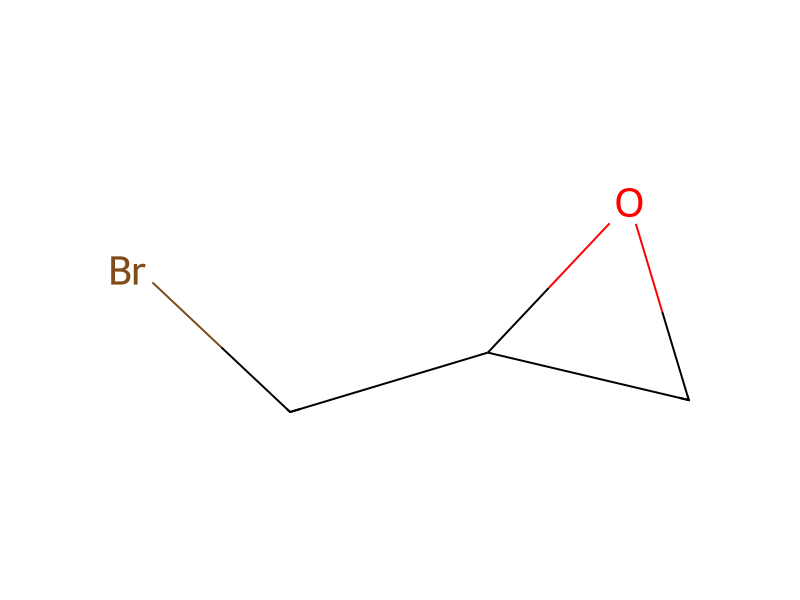
Epibromohydrin → 2-{2-[4-(2-Chlorophenyl)butyl]phenoxymethyl}oxirane
Reaction equation

[Cl:1][C:2]1[CH:7]=[CH:6][CH:5]=[CH:4][C:3]=1[CH2:8][CH2:9][CH2:10][CH2:11][C:12]1[CH:17]=[CH:16][CH:15]=[CH:14][C:13]=1[OH:18].[CH3:19][C:20](C)([O-:22])[CH3:21].[K+].C(C1OC1)Br>CC(N(C)C)=O>[Cl:1][C:2]1[CH:7]=[CH:6][CH:5]=[CH:4][C:3]=1[CH2:8][CH2:9][CH2:10][CH2:11][C:12]1[CH:17]=[CH:16][CH:15]=[CH:14][C:13]=1[O:18][CH2:19][CH:20]1[CH2:21][O:22]1Participants
5




Procedure
Following a procedure similar to that described in Example 1(a), 800 mg of 2-[4-(2-chlorophenyl)butyl]phenol (prepared as described in Preparation 18), 344 mg of potassium t-butoxide and 835 mg of epibromohydrin were reacted in 20 ml of dimethylacetamide. The crude product, extracted as described in Example 1(a), was purified as described in Example 1(a), to give 860 mg (yield 88%) of the title compound as a colorless oil.
Workup
- extractionThe crude product, extracted
- customwas purified
Sources & evidence
- ORD record
- ord-3fc4a683d5784079aacd923c9d62ffc6
- Source dataset
- uspto-grants-1996_09
- Patent number
- US05556864
Reaction notes
Loading…