4-Chloropyridine-2-carboxylic acid → (4-Chloro-pyridin-2-yl)-(4,5-difluoro-2,3-dihydro-indol-1-yl)-methanone
Reaction equation

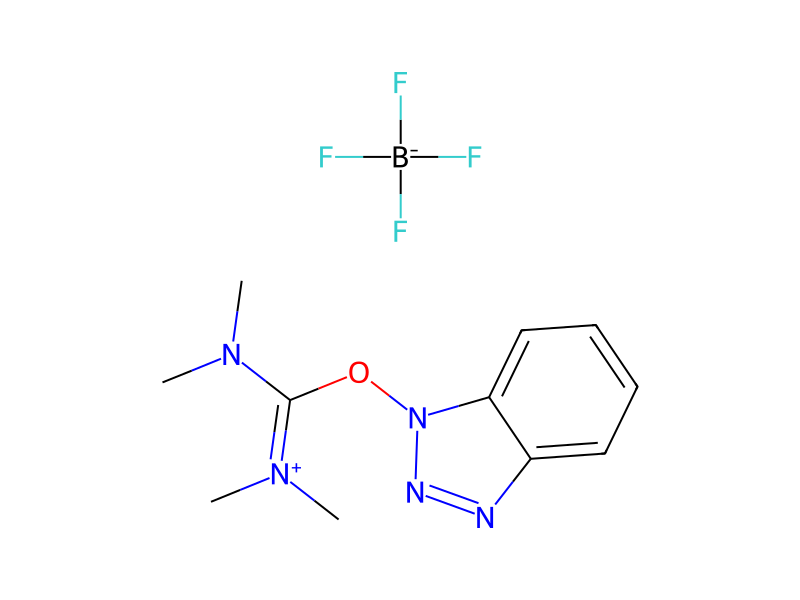
[Cl:1][C:2]1[CH:7]=[CH:6][N:5]=[C:4]([C:8]([OH:10])=O)[CH:3]=1.CN(C(ON1N=NC2C=CC=CC1=2)=[N+](C)C)C.[B-](F)(F)(F)F.Cl.[F:34][C:35]1[C:43]([F:44])=[CH:42][CH:41]=[C:40]2[C:36]=1[CH2:37][CH2:38][NH:39]2>CN(C=O)C>[Cl:1][C:2]1[CH:7]=[CH:6][N:5]=[C:4]([C:8]([N:39]2[C:40]3[C:36](=[C:35]([F:34])[C:43]([F:44])=[CH:42][CH:41]=3)[CH2:37][CH2:38]2)=[O:10])[CH:3]=1Participants
5
Reactant 3


Product 1

Reagents, catalysts & solvents 1

Procedure
0.50 g (3.2 mmol) 4-chloropicolinic acid, 1.1 g (3.4 mmol) TBTU and 0.91 mL (6.5 mmol) TEA were placed in 10 mL DMF. 0.63 g (3.3 mmol) 4,5-difluoroindoline hydrochloride were added. The reaction mixture was stirred overnight at RT and then extracted successively with a 15% potassium carbonate solution, water, a 1M HCl solution and EtOAc. The organic phase was dried, filtered and concentrated to dryness by rotary evaporation. The residue was stirred with diisopropylether and the undissolved solid was suction filtered and dried.
Workup
- extractionextracted successively with a 15% potassium carbonate solution, water
- customThe organic phase was dried
- filtrationfiltered
- concentrationconcentrated to dryness by rotary evaporation
- stirringThe residue was stirred with diisopropylether
- filtrationfiltered
- customdried
Sources & evidence
- ORD record
- ord-e7715b4c41a841ddbe40092327e7cbb0
- Source dataset
- uspto-grants-2014_09
- Patent number
- US08829006B2
Reaction notes
Loading…