Water → (5-Bromo-4-chloro-pyridin-2-yl)-(5-fluoro-2,3-dihydro-indol-1-yl)-methanone
Reaction equation

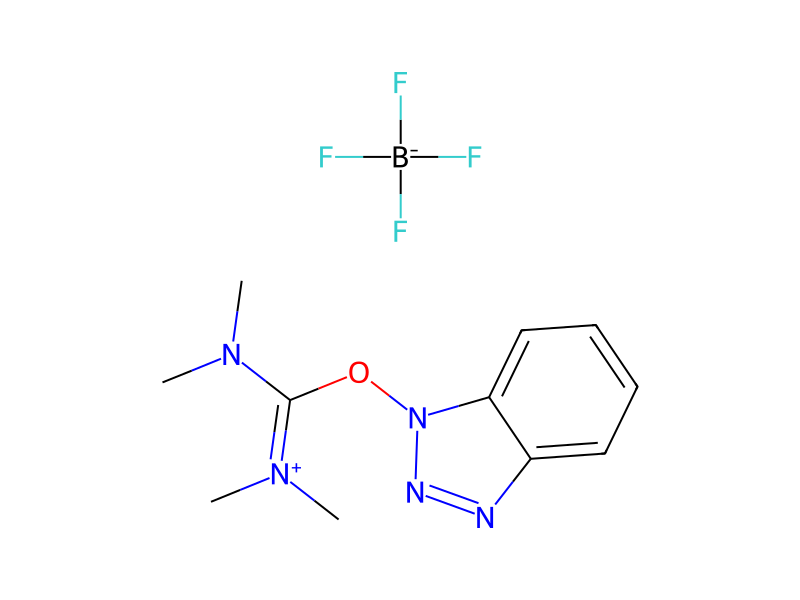
CN(C(ON1N=NC2C=CC=CC1=2)=[N+](C)C)C.[B-](F)(F)(F)F.[Br:23][C:24]1[C:25]([Cl:33])=[CH:26][C:27]([C:30]([OH:32])=O)=[N:28][CH:29]=1.[F:34][C:35]1[CH:36]=[C:37]2[C:41](=[CH:42][CH:43]=1)[NH:40][CH2:39][CH2:38]2.O>CN(C=O)C>[Br:23][C:24]1[C:25]([Cl:33])=[CH:26][C:27]([C:30]([N:40]2[C:41]3[C:37](=[CH:36][C:35]([F:34])=[CH:43][CH:42]=3)[CH2:38][CH2:39]2)=[O:32])=[N:28][CH:29]=1Participants
6
Reactant 4



Product 1

Reagents, catalysts & solvents 1

Procedure
0.75 mg (2.3 mmol) TBTU were added to 0.50 g (2.1 mmol) 5-bromo-4-chloro-pyridine-2-carboxylic acid, 0.29 g (2.1 mmol) 5-fluoro-2,3-dihydro-1H-indole and 0.62 mL (4.4 mmol) TEA in 11 mL DMF and the mixture was stirred overnight at RT. Then the reaction mixture was combined with water, the precipitate formed was suction filtered and dried.
Workup
- customthe precipitate formed
- filtrationfiltered
- customdried
Sources & evidence
- ORD record
- ord-ca0196b21ea7422b95abf6325bf9cc88
- Source dataset
- uspto-grants-2014_09
- Patent number
- US08829006B2
Reaction notes
Loading…