1-Benzylpiperazine → 2-[(4-Benzylpiperazin-1-yl)methyl]-1H-benzimidazole
Reaction equation

[CH2:1]([N:8]1[CH2:13][CH2:12][NH:11][CH2:10][CH2:9]1)[C:2]1[CH:7]=[CH:6][CH:5]=[CH:4][CH:3]=1.Cl[CH2:15][C:16]1[NH:17][C:18]2[CH:24]=[CH:23][CH:22]=[CH:21][C:19]=2[N:20]=1>>[CH2:1]([N:8]1[CH2:13][CH2:12][N:11]([CH2:15][C:16]2[NH:17][C:18]3[CH:24]=[CH:23][CH:22]=[CH:21][C:19]=3[N:20]=2)[CH2:10][CH2:9]1)[C:2]1[CH:3]=[CH:4][CH:5]=[CH:6][CH:7]=1Participants
3
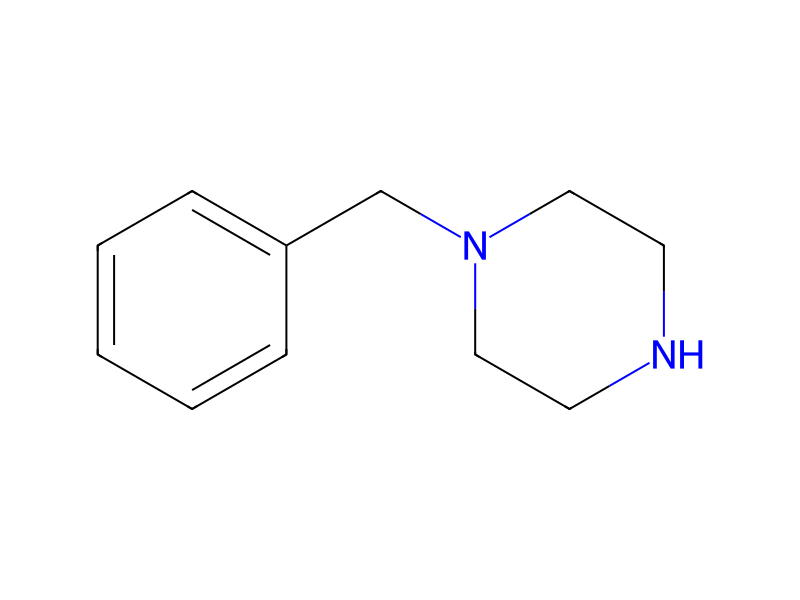


Procedure
In the same manner as described in Reference Example 4, N-benzylpiperazine (20 g) and 2-chloromethylbenzimidazole (9.0 g) are reacted, and the crude crystal thus obtained is recrystallized from ethyl acetate to give 2-(4-benzyl-1-piperazinyl)methylbenzimidazole (13.8 g) as pale yellow needles, m.p. 195°-201° C.
Workup
- customare reacted
- customthe crude crystal thus obtained
- customis recrystallized from ethyl acetate
Sources & evidence
- ORD record
- ord-d1ebb21bd3514963b1c12edc47e99675
- Source dataset
- uspto-grants-1986_07
- Patent number
- US04603130
Reaction notes
Loading…