Water → 2-Bromo-4-methoxy-3-(4-nitrophenoxy)benzaldehyde
Reaction equation

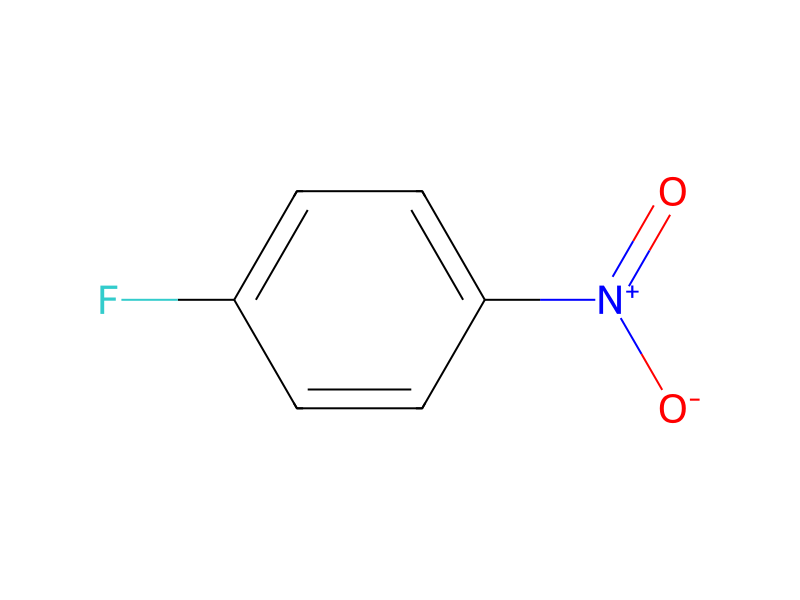
[F-].[K+].[Br:3][C:4]1[C:11]([OH:12])=[C:10]([O:13][CH:14]2CCCC2)[CH:9]=[CH:8][C:5]=1[CH:6]=[O:7].F[C:20]1[CH:25]=[CH:24][C:23]([N+:26]([O-:28])=[O:27])=[CH:22][CH:21]=1.O>CS(C)=O>[Br:3][C:4]1[C:11]([O:12][C:20]2[CH:25]=[CH:24][C:23]([N+:26]([O-:28])=[O:27])=[CH:22][CH:21]=2)=[C:10]([O:13][CH3:14])[CH:9]=[CH:8][C:5]=1[CH:6]=[O:7]Participants





Conditions
- Temperature
- 140 °C
Procedure
To a stirred suspension of potassium fluoride (125 mg, 2.104 mmol) in dry DMSO (2.5 ml) was added a solution of 2-bromo-4-cyclopentoxy-3-hydroxy-benzaldehyde (500 mg, 1.754 mmol) in DMSO (2.5 ml). A solution of 4-fluoronitrobenzene (500 mg, 2.631 mmol) in DMSO (2.5 ml) was added to the above suspension and the reaction mixture was stirred at 140° C. for 6 h. The reaction mixture was cooled to room temperature and the contents were poured into water (100 ml) and extracted with ethyl acetate (50 ml×3). The organic extracts were combined and washed with 1N sodium hydroxide (25 ml×2), water and brine and dried over anhydrous sodium sulfate. The dried organic layer was concentrated in vacuo to give 2-bromo-3-(p-nitrophenoxy)-4-methoxy benzaldehyde as a pale yellow solid (500 mg) mp: 115-117° C.
Workup
- temperatureThe reaction mixture was cooled to room temperature
- extractionextracted with ethyl acetate (50 ml×3)
- washwashed with 1N sodium hydroxide (25 ml×2), water and brine
- dry with materialdried over anhydrous sodium sulfate
- concentrationThe dried organic layer was concentrated in vacuo
Sources & evidence
- ORD record
- ord-d66eb74dd8884e1da4dc1e65fa55a369
- Source dataset
- uspto-grants-2008_07
- Patent number
- US07393846B2
Reaction notes
Loading…