Triethylamine → 2-methyl-N1-(3-nitroquinolin-4-yl)propane-1,2-diamine
Reaction equation

Cl[C:2]1[C:11]2[C:6](=[CH:7][CH:8]=[CH:9][CH:10]=2)[N:5]=[CH:4][C:3]=1[N+:12]([O-:14])=[O:13].C(N(CC)CC)C.[NH2:22][CH2:23][C:24]([NH2:27])([CH3:26])[CH3:25]>C(Cl)Cl.C(Cl)(Cl)Cl>[CH3:25][C:24]([NH2:27])([CH3:26])[CH2:23][NH:22][C:2]1[C:11]2[C:6](=[CH:7][CH:8]=[CH:9][CH:10]=2)[N:5]=[CH:4][C:3]=1[N+:12]([O-:14])=[O:13]Participants
6





Procedure
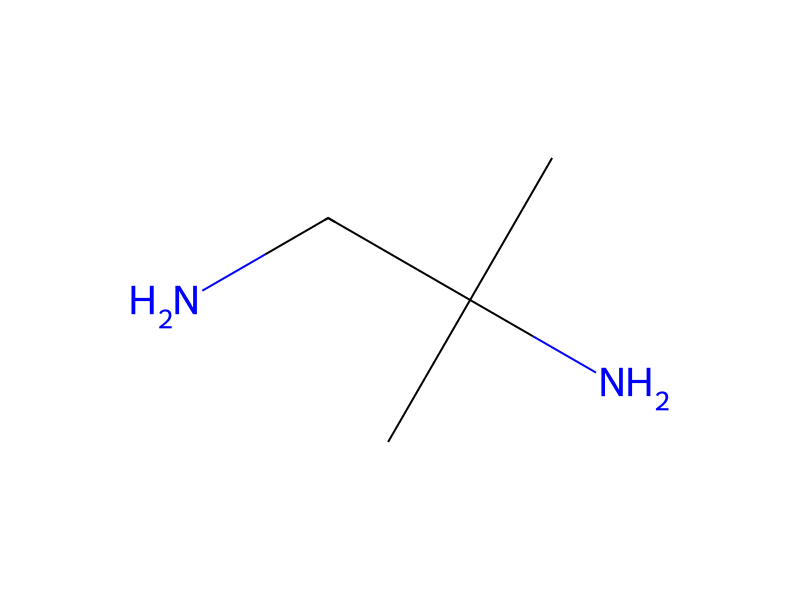
A stirred solution of 4-chloro-3-nitroquinoline (2.08 g, 10.0 mmol) in 20 mL of anhydrous CH2Cl2, under N2, was treated with triethylamine (2.79 mL, 20.0 mol) and 1,2-diamino-2-methylpropane (1.15 mL, 11.0 mmol). After stirring for 2 d, the reaction mixture was diluted with 100 mL of CHCl3 washed with H2O (3×50 mL) and brine (50 mL). The organic portion was dried over Na2SO4 and concentrated to give 2-methyl-N1-(3-nitroquinolin-4-yl)propane-1,2-diamine (2.45 g) as a bright yellow solid.
Workup
- washwashed with H2O (3×50 mL) and brine (50 mL)
- dry with materialThe organic portion was dried over Na2SO4
- concentrationconcentrated
Sources & evidence
- ORD record
- ord-501c97a2fb314f5080c1764c8e67e1a8
- Source dataset
- uspto-grants-2008_07
- Patent number
- US07393859B2
Reaction notes
Loading…