Triethylamine → N-(Cyclobutylcarbonyl)glycine ethyl ester
Reaction equation

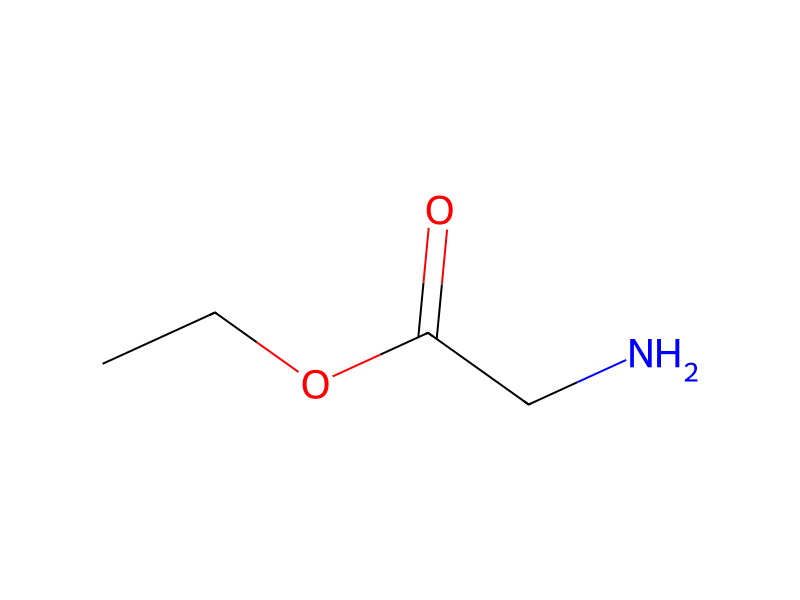
[CH:1]1([C:5](Cl)=[O:6])[CH2:4][CH2:3][CH2:2]1.[NH2:8][CH2:9][C:10]([O:12][CH2:13][CH3:14])=[O:11].C(N(CC)CC)C>ClCCl>[CH:1]1([C:5]([NH:8][CH2:9][C:10]([O:12][CH2:13][CH3:14])=[O:11])=[O:6])[CH2:4][CH2:3][CH2:2]1Participants
5
Reactant 3


Product 1

Reagents, catalysts & solvents 1

Procedure
Cyclobutane carbonyl chloride (5 ml, 43.8 mmol) was slowly added to a solution of ethyl glycinate (5.86 g, 42 mmol) in dichloromethane (100 ml) and triethylamine (14.6 ml, 105 mmol) at 0° C. The mixture was then stirred at ambient temperature for 14 hours. The reaction mixture was washed with 1.0 N hydrochloric acid and the organic phase separated, dried (magnesium sulphate) and evaporated in vacuo to yield a yellow solid. Recrystallisation from dichloromethane:petroleum ether, yielded ethyl N-(cyclobutylcarbonyl)glycinate as a white solid (7.78 g, 100% yield):
Workup
- washThe reaction mixture was washed with 1.0 N hydrochloric acid
- customthe organic phase separated
- dry with materialdried (magnesium sulphate)
- customevaporated in vacuo
- customto yield a yellow solid
- customRecrystallisation from dichloromethane
Sources & evidence
- ORD record
- ord-f953039aeb7a4d5cbf3971b41b371e97
- Source dataset
- uspto-grants-2008_07
- Patent number
- US07402585B2
Reaction notes
Loading…