Triphenylphosphine → HCID 69270257, compound
Reaction equation

C1(P(C2C=CC=CC=2)C2C=CC=CC=2)C=CC=CC=1.N(C(OCC)=O)=NC(OCC)=O.[C:32]([O:36][CH2:37][CH2:38][OH:39])([CH3:35])([CH3:34])[CH3:33].O[C:41]1[CH:42]=[C:43]2[C:47](=[CH:48][CH:49]=1)[NH:46][CH:45]=[CH:44]2>C(Cl)Cl.O>[C:32]([O:36][CH2:37][CH2:38][O:39][C:41]1[CH:42]=[C:43]2[C:47](=[CH:48][CH:49]=1)[NH:46][CH:45]=[CH:44]2)([CH3:35])([CH3:34])[CH3:33]Participants
7

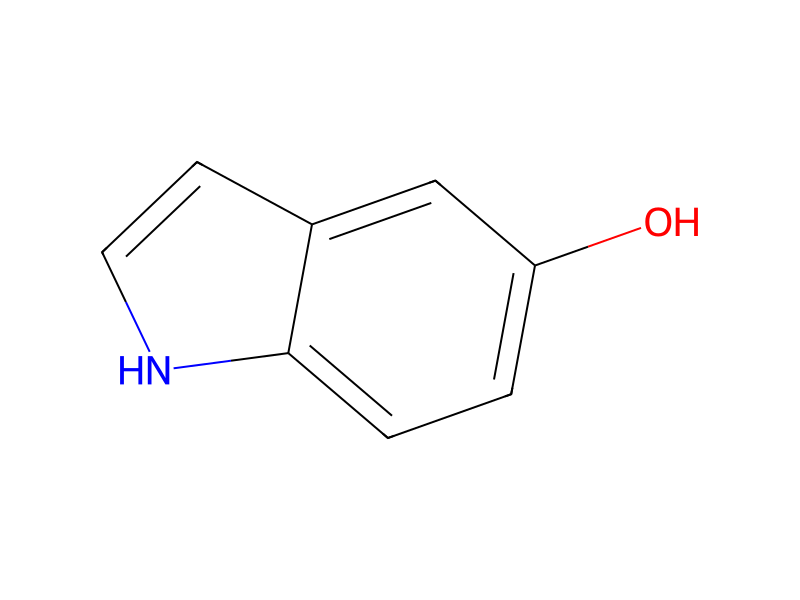





Conditions
- Temperature
- 0 °C
Procedure
Add triphenylphosphine (600 mg, 2.29 mmol) to a solution of diethyl azodicarboxylate (0.36 mL, 2.29 mmol) in methylene chloride (10 ml) at 0° C. followed by ethylene glycol mono-t-butyl ether (0.30 mL, 2.29 mmol), and stir the mixture for 20 minutes at 0° C. Add 5-hydroxyindole (200 mg, 1.5 mmol), remove the cold bath, and stir for 5 hours. Add water (2 mL), transfer the resultant mixture to a separatory funnel, and separate the layers. Wash the organic layer with 0.1 N aqueous HCl and brine, then dry over sodium sulfate, filter, and concentrate. Purification by flash chromatography and eluting with hexane:ethyl acetate gives 127 mg (36%) of the title compound as a light yellow solid. Mass spectrum: electrospray (m/z) 232 (M−−1).
Workup
- stirringstir for 5 hours
- customseparate the layers
- washWash the organic layer with 0.1 N aqueous HCl and brine
- dry with materialdry over sodium sulfate
- filtrationfilter
- concentrationconcentrate
- customPurification by flash chromatography
- washeluting with hexane
Sources & evidence
- ORD record
- ord-b54e96a5228846e6aaeb7cfc317a1324
- Source dataset
- uspto-grants-2008_07
- Patent number
- US07405305B2
Reaction notes
Loading…