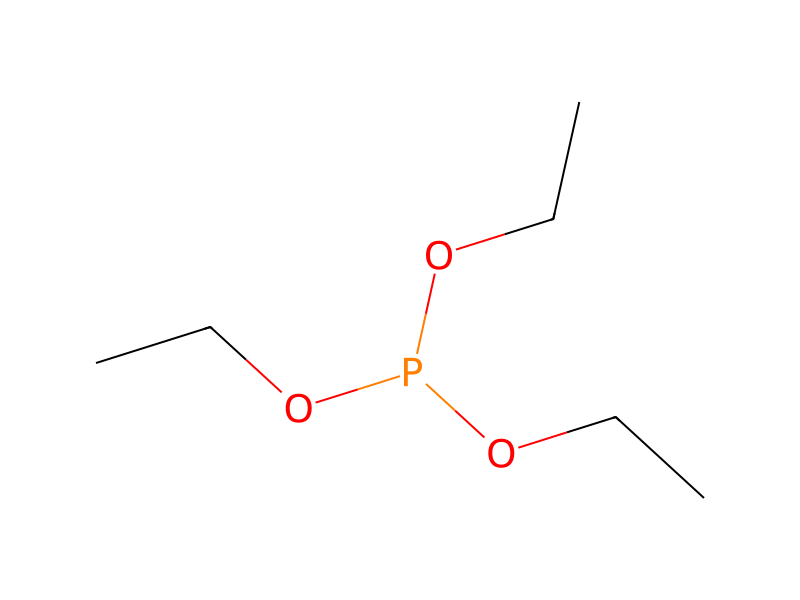
Triethyl phosphite → 2-(2,6-Dichlorophenyl)-3,8-dihydroimidazo[4,5-d]dipyrido[2,3-b:4',3'-f]azepine dihydrochloride
Reaction equation

[Cl:1][C:2]1[CH:7]=[CH:6][CH:5]=[C:4]([Cl:8])[C:3]=1[C:9]1[N:10](O)[C:11]2[C:17]3[CH:18]=[CH:19][N:20]=[CH:21][C:16]=3[NH:15][C:14]3[N:22]=[CH:23][CH:24]=[CH:25][C:13]=3[C:12]=2[N:26]=1.P(OCC)(OCC)OCC>CN(C)C=O>[ClH:1].[ClH:1].[Cl:8][C:4]1[CH:5]=[CH:6][CH:7]=[C:2]([Cl:1])[C:3]=1[C:9]1[NH:10][C:11]2[C:17]3[CH:18]=[CH:19][N:20]=[CH:21][C:16]=3[NH:15][C:14]3[N:22]=[CH:23][CH:24]=[CH:25][C:13]=3[C:12]=2[N:26]=1Participants
Reactant 2

Product 1

Reagents, catalysts & solvents 1

Procedure
2-(2,6-Dichlorophenyl)imidazo[4,5-d]dipyrido[2,3-b:4′,3′-f]azepin-3(8H)-ol (15.2 g, 0.0384 mol) in N,N-dimethylformamide (250 mL) was treated with triethyl phosphite (26.3 mL, 0.153 mol) and the solution was heated to reflux for 2.5 hours. The solution was allowed to cool to room temperature and was concentrated in vacuo. The residual yellow solid was collected by filtration (using 2 L of acetonitrile to wash). The yellow powder was then dissolved in 250 mL of 0.5 N aqueous hydrochloric acid and 50 mL of acetonitrile. The dark red solution was freeze dried for 16 hours to afford the desired product as an orange-red powder (14.0 g, 85%). 1H NMR (400 MHz, d6-DMSO): δ 8.81 (s, 1H), 8.09 (d, J=6.2 Hz, 1H), 8.03 (s, 1H), 7.94 (dd, J=5.0, 1.6 Hz, 1H), 7.69-7.57 (m, 5H), 6.86 (dd, J=7.5, 4.9 Hz, 1H). LCMS calculated for C19H12Cl2N5 (M+H)+: m/z=380.
Workup
- temperaturethe solution was heated
- temperatureto reflux for 2.5 hours
- concentrationwas concentrated in vacuo
- filtrationThe residual yellow solid was collected by filtration (using 2 L of acetonitrile to wash)
- dissolutionThe yellow powder was then dissolved in 250 mL of 0.5 N aqueous hydrochloric acid
- customdried for 16 hours
Sources & evidence
- ORD record
- ord-b214cf7d320b41aaa9c6a0a3c5680a30
- Source dataset
- uspto-grants-2014_09
- Patent number
- US08835423B2
Reaction notes
Loading…