Hydrochloric Acid → 3-(4-(3-(2,6-Difluorophenyl)ureido)-3-methylphenyl)isoxazole-5-carboxylic acid
Reaction equation

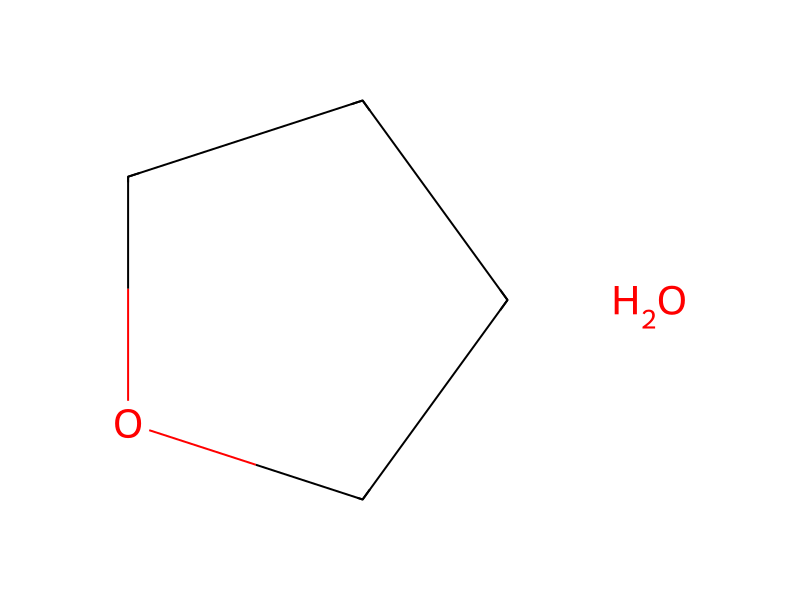
[F:1][C:2]1[CH:7]=[CH:6][CH:5]=[C:4]([F:8])[C:3]=1[NH:9][C:10](=[O:29])[NH:11][C:12]1[CH:17]=[CH:16][C:15]([C:18]2[CH:22]=[C:21]([C:23]([O:25]CC)=[O:24])[O:20][N:19]=2)=[CH:14][C:13]=1[CH3:28].[OH-].[Na+].Cl>C1COCC1.O>[F:8][C:4]1[CH:5]=[CH:6][CH:7]=[C:2]([F:1])[C:3]=1[NH:9][C:10](=[O:29])[NH:11][C:12]1[CH:17]=[CH:16][C:15]([C:18]2[CH:22]=[C:21]([C:23]([OH:25])=[O:24])[O:20][N:19]=2)=[CH:14][C:13]=1[CH3:28]Participants
Reactant 3



Product 1

Reagents, catalysts & solvents 1
Procedure
Into a 100 ml round bottom flask was added ethyl 3-(4-(3-(2,6-difluorophenyl)ureido)-3-methylphenyl)isoxazole-5-carboxylate (1.0 equiv.), NaOH (5.0 equiv.) and 150 ml of 2:1 THF/Water. The mixture was stirred at room temperature for 15 minutes. The reaction mixture was slightly acidified to pH <7 by adding 2N HCl and then the solvent was evaporated. The solid was suspended in water and filtered, given water washings and air-dried. The resulting solid was triturated with minimum quantity of acetone and collected by filtration. This yielded the title compound as a white solid (91%) after it was dried in vacuo; mp 254-258° C. (dec.); 1H NMR (300 MHz; DMSO-d6) δ: 2.31 (s, 3H), 7.10-7.18 (m, 2H), 7.24-7.34 (m, 1H), 7.68-7.72 (m, 2H), 7.78 (s, 1H), 8.03-8.06 (d, J=8.4 Hz, 1H), 8.31 (s, 1H), 8.65 (s, 1H); IR (KBr) 3323, 3189, 3074, 3006, 1743, 1649, 1641, 1569, 1492, 1469, 1243, 1218, 1181, 1003, 833, 733 cm−1.
Workup
- customthe solvent was evaporated
- filtrationfiltered
- customair-dried
- customThe resulting solid was triturated with minimum quantity of acetone
- filtrationcollected by filtration
Sources & evidence
- ORD record
- ord-866c6f4329544264a5c179cd4b528633
- Source dataset
- uspto-grants-2014_09
- Patent number
- US08835428B2
Reaction notes
Loading…