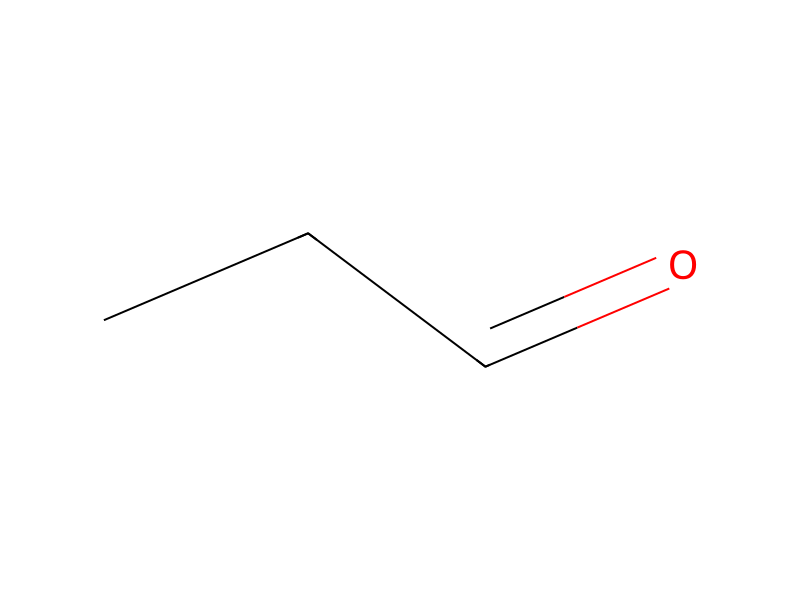
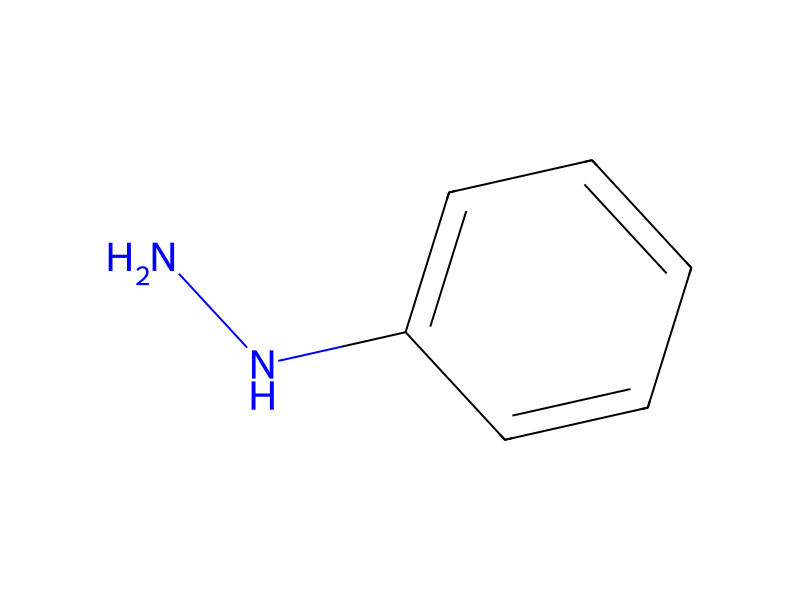
Propanal → Propanal, 2-phenylhydrazone
Reaction equation

[CH:1](=O)[CH2:2][CH3:3].[C:5]1([NH:11][NH2:12])[CH:10]=[CH:9][CH:8]=[CH:7][CH:6]=1>C(Cl)(Cl)(Cl)Cl>[C:5]1([NH:11][N:12]=[CH:1][CH2:2][CH3:3])[CH:10]=[CH:9][CH:8]=[CH:7][CH:6]=1Participants
4

Reagents, catalysts & solvents 1

Procedure
Following the same procedure described in Example 1, Part A, but using 100 ml. carbon tetrachloride as the solvent for 5.8 g. (0.1 mole) propionaldehyde, adding a solution of 10.8 g. (0.1 mole) phenylhydrazine in 25 ml. carbon tetrachloride, and removing the water formed by the reaction as its carbon tetrachloride azeotrope (volume of about 50 ml.), there was obtained a carbon tetrachloride solution of propionaldehyde phenylhydrazone.
Workup
- customcarbon tetrachloride, and removing the water
- customformed by the reaction as its carbon tetrachloride azeotrope (volume of about 50 ml.)
Sources & evidence
- ORD record
- ord-cd87cb7c84bb416bba003226497747fd
- Source dataset
- uspto-grants-1978_06
- Patent number
- US04094906
Reaction notes
Loading…