Methyl Isobutyl Ketone → HCID 18421061, compound
Reaction equation

C(C(C)=O)C(C)C.[Br:8][C:9]([Br:25])=[C:10]([C:18]1[CH:23]=[CH:22][C:21]([OH:24])=[CH:20][CH:19]=1)[C:11]1[CH:16]=[CH:15][C:14]([OH:17])=[CH:13][CH:12]=1.[N:26]#[C:27]Br.[CH2:29]([N:31](CC)CC)C>>[Br:8][C:9]([Br:25])=[C:10]([C:18]1[CH:23]=[CH:22][C:21]([O:24][C:27]#[N:26])=[CH:20][CH:19]=1)[C:11]1[CH:12]=[CH:13][C:14]([O:17][C:29]#[N:31])=[CH:15][CH:16]=1Participants
5


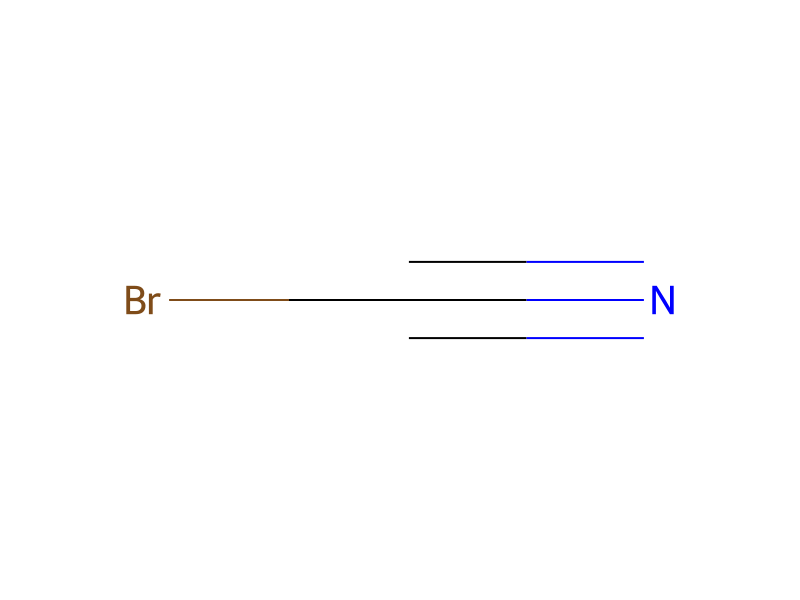


Conditions
- Temperature
- -20 °C
Procedure
A 4-necked 5-L flask, equipped with a mechanical stirrer, a thermometer, and an additional funnel, is charged with methyl isobutyl ketone (1500 g), 1,1-dibromo-2,2-bis(4-hydroxyphenyl)ethene (420 g), and cyanogen bromide (270 g). The resulting solution is cooled to −20° C. with a dry ice/acetone bath. To the stirring solution, triethylamine (240 g) in the additional funnel is added dropwise. The reaction temperature is maintained below −20° C. After the addition, the resulting mixture is allowed to warm up to 0° C. and quenched with dilute HCl aqueous solution. The organic layer is washed further with water several times and concentrated under vacuum to afford the desired product.
Workup
- customA 4-necked 5-L flask, equipped with a mechanical stirrer
- temperatureThe reaction temperature is maintained below −20° C
- additionAfter the addition
- temperatureto warm up to 0° C.
- customquenched with dilute HCl aqueous solution
- washThe organic layer is washed further with water several times
- concentrationconcentrated under vacuum
Sources & evidence
- ORD record
- ord-36c2bf22b40b438bb3a26919bf4e44ae
- Source dataset
- uspto-grants-2002_04
- Patent number
- US06365671B1
Reaction notes
Loading…