1,4-Dibromobenzene → HCID 70097928, compound
Reaction equation

Br[C:2]1[CH:7]=[CH:6][C:5]([Br:8])=[CH:4][CH:3]=1.CC(C)=O.C(=O)=O.[Li]CCCC.[CH3:21][Si:22](Cl)([CH3:35])[CH2:23][CH2:24][CH2:25][CH2:26][CH2:27][CH2:28][CH2:29][CH2:30][CH2:31][CH2:32][CH2:33][CH3:34]>C1COCC1.O>[Br:8][C:5]1[CH:6]=[CH:7][C:2]([Si:22]([CH3:21])([CH3:35])[CH2:23][CH2:24][CH2:25][CH2:26][CH2:27][CH2:28][CH2:29][CH2:30][CH2:31][CH2:32][CH2:33][CH3:34])=[CH:3][CH:4]=1Participants


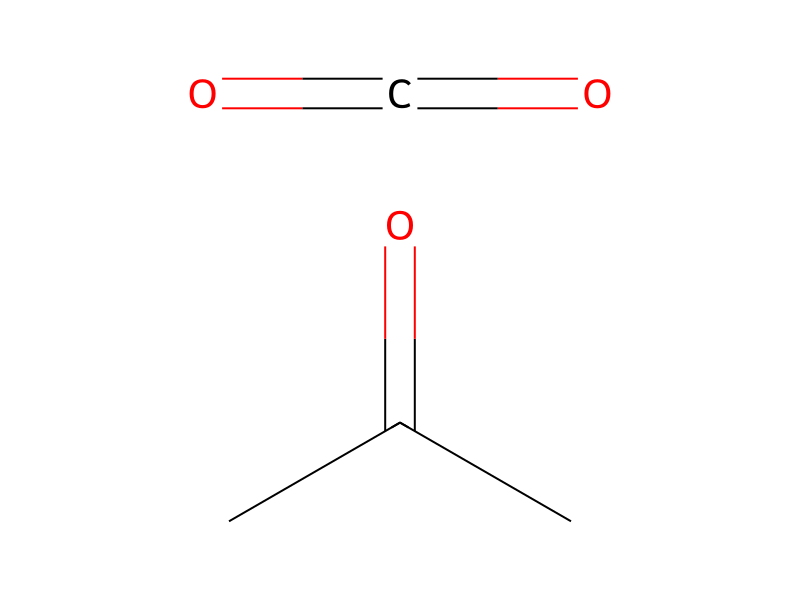




Conditions
- Temperature
- -78 °C
Procedure
100 mL of THF and 8.5 g (0.036 moles) of 1,4-dibromobenzene were put into a Schlenk flask which had been filled with nitrogen. Then the flask was agitated. The temperature was maintained at −78° C. by using acetone/dry ice. 22.6 mL (0.036 moles) of n-BuLi (1.6 M n-hexane solution) was slowly dropped into the reaction mixture over 10 minutes. After several minutes, a white salt began to be formed. After completion of the dropping of n-BuLi, a further agitation was carried out for about one hour. Then 10 g of dimethyldodecylsilyl chloride dissolved in 20 mL of THF was slowly dropped into the solution. Then the solution became clearer. After about three hours, the solution was put into 300 nL of water, and extracted with ethyl acetate. The extracts were dried by using anhydrous MgSO4 and filtered with a solvent, and then the solvent was evaporated. The obtained oil was either distilled in a vacuum (boiling point of 160-170° C./1.5 mmHg), or purified by a silica gel chromatography (eluent: n-hexane). Thus, 1-bromo-4-(dimethyldodecylsilyl)benzene (I) was obtained with a yield of about 90 % or above. The chemical structure of compound (I) was identified through 1H-NMR as follow: 1H-NMR (CDCl3): δ0.24 (s, 6H, Si(CH3)2), 0.72 (t, 2H, SiCH2), 0.89 (t, 3H,—CH3), 1.27 (m, 20H, (CH2)10, 7.37 and 7.49 (d, 4H, aromatic protons).
Workup
- additionwhich had been filled with nitrogen
- waitAfter several minutes
- customto be formed
- additionwas slowly dropped into the solution
- extractionextracted with ethyl acetate
- customThe extracts were dried
- filtrationfiltered with a solvent
- customthe solvent was evaporated
- distillationeither distilled in a vacuum (boiling point of 160-170° C./1.5 mmHg)
- custompurified by a silica gel chromatography (eluent: n-hexane)
Sources & evidence
- ORD record
- ord-9eba9b178c164f0599ae8d78c75281e1
- Source dataset
- uspto-grants-2002_04
- Patent number
- US06368732B1
Reaction notes
Loading…