Hydrochloric Acid → HCID 14154537, compound
Reaction equation

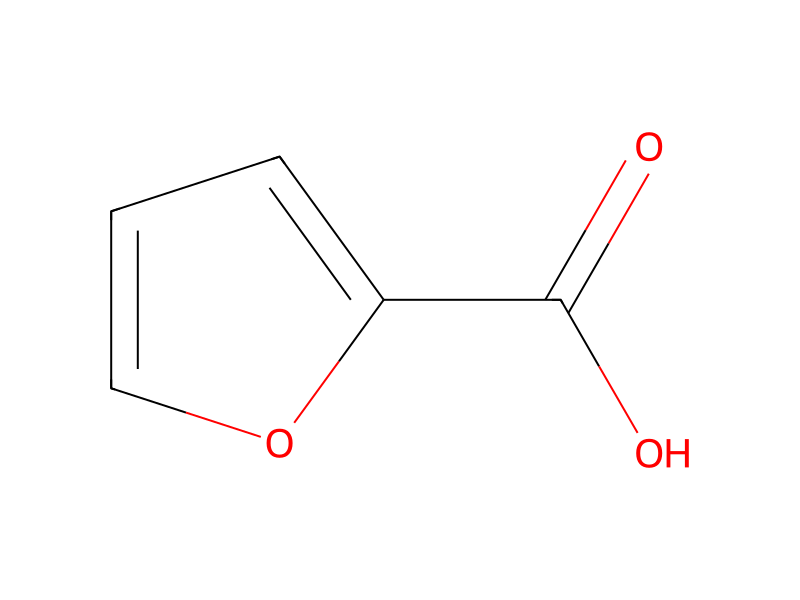
[O:1]1[CH:5]=[CH:4][CH:3]=[C:2]1[C:6](O)=O.[NH2:9][C:10]1[C:11](=[O:24])[N:12]([CH2:21][CH2:22][CH3:23])[C:13](=[O:20])[N:14]([CH2:17][CH2:18][CH3:19])[C:15]=1[NH2:16].Cl.[OH-].[Na+]>O>[CH2:21]([N:12]1[C:11](=[O:24])[C:10]2[NH:9][C:6]([C:2]3[O:1][CH:5]=[CH:4][CH:3]=3)=[N:16][C:15]=2[N:14]([CH2:17][CH2:18][CH3:19])[C:13]1=[O:20])[CH2:22][CH3:23]Participants
Reactant 4



Product 1

Reagents, catalysts & solvents 1

Procedure
The starting 1,3-dipropyl-8-(2-furanyl)xanthine is prepared as follows: 1.8 g (17 mmol) 2-furoic acid is added to a solution of 3.7 g, 5,6-diamino-1,3-dipropyluracil (17 mmol) (J. Am. Chem. Soc. (1954) 76 2798) in 50 ml water. The pH is adjusted to 5, then 3.2 g (17 mmol) ethyl-3-(3-dimethylamino) propylcarbodiimide is added. The pH is maintained between 5 and 6 using 1 N HCl. After 2 hours the pH stabilizes, and the solution is taken to pH 13 using 50% aqueous NaOH. The resulting mixture is refluxed for 30 minutes, activated carbon added, and filtered hot through celite. The filtrate is then extracted (3×100 ml CH2Cl2), dried (MgSO4), and concentrated to yield 1.7 g yellow solid. This is recrystallized from methanol to give the 1,3-dipropyl-8-(2-tetrahydrofuranyl)xanthine as white needles, mp 246°- 248° C. Analysis as C15H18N4O3 (302.3); Calculated: C, 59.59; H, 6.00; N, 18.53. Found: C, 58,86; H, 6.53; N, 19.45.
Workup
- temperatureThe resulting mixture is refluxed for 30 minutes
- additionactivated carbon added
- filtrationfiltered hot through celite
- extractionThe filtrate is then extracted (3×100 ml CH2Cl2)
- dry with materialdried (MgSO4)
- concentrationconcentrated
Sources & evidence
- ORD record
- ord-3ffa1811bee74c9f88ee278ad4f65469
- Source dataset
- uspto-grants-1988_07
- Patent number
- US04755517
Reaction notes
Loading…