4-Hydroxybenzoic Acid → Cyclohexanecarboxylic acid
Reaction equation

O[C:2]1[CH:10]=[CH:9][C:5]([C:6]([OH:8])=[O:7])=[CH:4][CH:3]=1.[H][H]>C(O)(C)C.[C].[Pd]>[CH2:2]1[CH2:10][CH2:9][CH:5]([C:6]([OH:8])=[O:7])[CH2:4][CH2:3]1Participants
5
Reactant 2
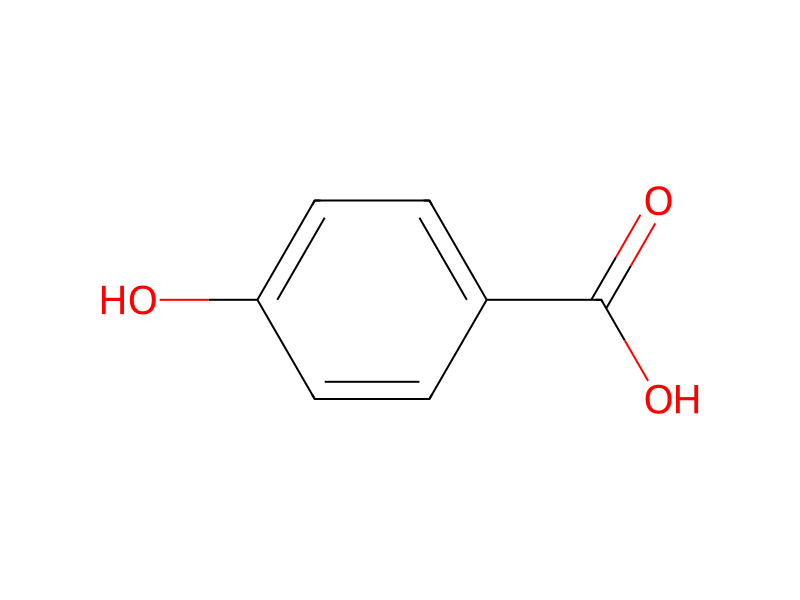

Product 1

Reagents, catalysts & solvents 2


Procedure
One mole of 4-hyroxybenzoic acid was reacted with two moles of hydrogen in the presence of 5% palladium-carbon catlyst. This reaction was carried out in isopropyl alcohol at a temperature of 130°-140° C. and a hydrogen pressure of 20-40 kg/cm2 (gauge). After the reaction mixture was filtered to recover the catalyst therefrom, the filtrate was distilled to recover the solvent. The resulting residue was recrystallized from a mixture of benzene and hexane to obtain cyclohexane-4-carboxylic acid. This product had a melting point of 67.0°-68.0° C.
Workup
- filtrationAfter the reaction mixture was filtered
- customto recover the catalyst
- distillationthe filtrate was distilled
- customto recover the solvent
- customThe resulting residue was recrystallized from a mixture of benzene and hexane
Sources & evidence
- ORD record
- ord-3ea57813eb404e09bf73eb146cfcfc2a
- Source dataset
- uspto-grants-1988_07
- Patent number
- US04755616
Reaction notes
Loading…