Benzaldehyde → 1-Cyclohexyl-4-dimethylamino-2-phenyl-2-buten-1-ol
반응식

C([Li])CCC.C(C1C=C(C(C)C)C=C(C(C)C)C=1S(NN=[C:26]([C:32]1[CH:37]=[CH:36][CH:35]=[CH:34][CH:33]=1)[CH2:27][CH2:28][N:29]([CH3:31])[CH3:30])(=O)=O)(C)C.[CH:38](=[O:45])[C:39]1[CH:44]=[CH:43][CH:42]=[CH:41][CH:40]=1.Cl>CCCCCC.COCCOC.C(OCC)C>[CH:39]1([CH:38]([OH:45])[C:26]([C:32]2[CH:33]=[CH:34][CH:35]=[CH:36][CH:37]=2)=[CH:27][CH2:28][N:29]([CH3:30])[CH3:31])[CH2:44][CH2:43][CH2:42][CH2:41][CH2:40]1참가 물질
반응물 4

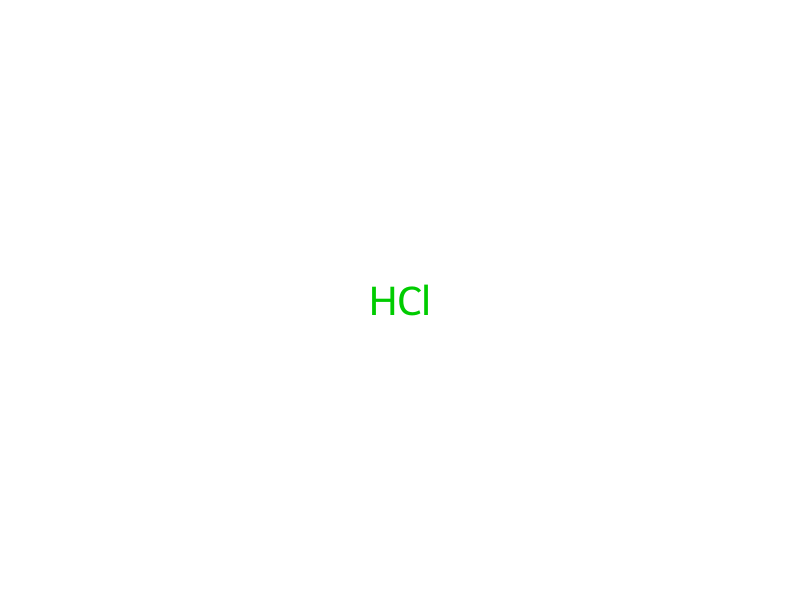

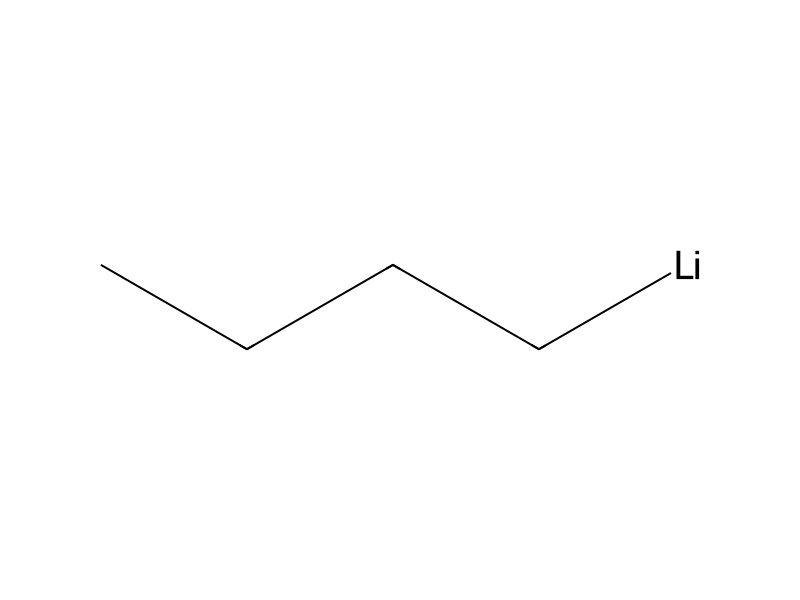
생성물 1

시약·촉매·용매 3
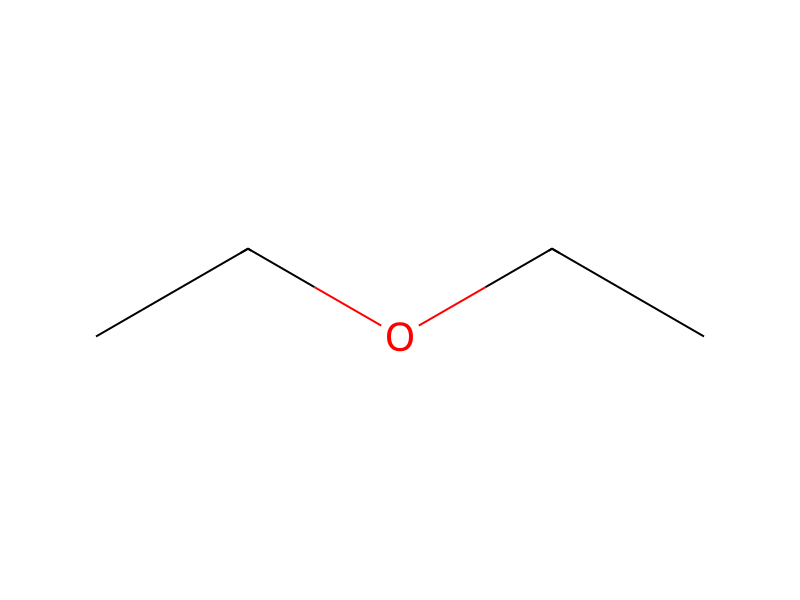
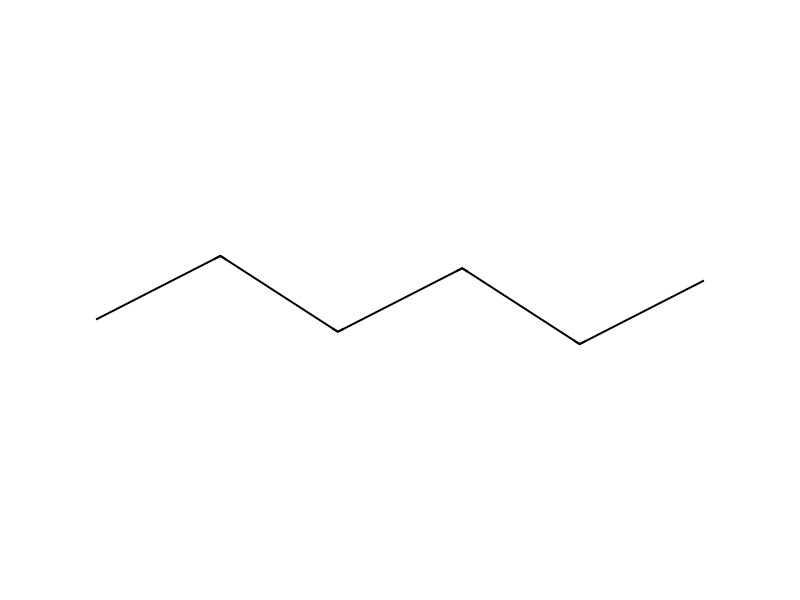
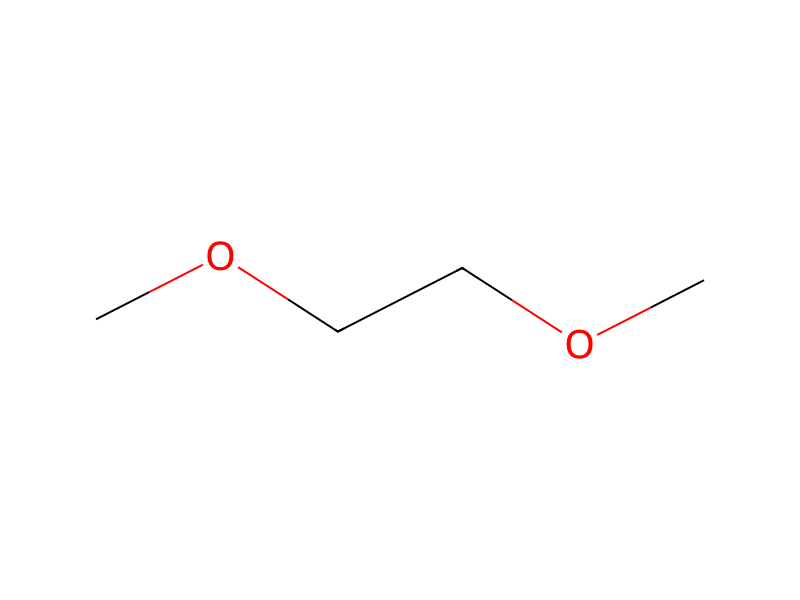
반응 조건
- 온도
- 0 °C
실험 절차
A 1.5M solution (29 cc) of n-butyllithium in hexane is added to a solution of β-dimethylaminopropiophenone 2,4,6-triisopropylbenzenesulphonylhydrazone (9.15 g) in 1,2-dimethoxyethane (100 cc) kept under a nitrogen atmosphere at a temperature in the region of -75° C. The orange solution obtained is then stirred for 15 minutes at a temperature in the region of 0° C., and then cooled to a temperature in the region of -40° C. Benzaldehyde (2.2 cc) is then added, and then the reaction mixture is stirred for 1 hour at a temperature in the region of 20° C. A 1N aqueous solution (100 cc) of hydrochloric acid is then added with stirring, followed by ethyl ether (100 cc). The aqueous phase is separated; the organic phase is extracted with a 0.1N aqueous solution (25 cc) of hydrochloric acid. The aqueous phases are combined, washed with ether (2×50 cc) and then made alkaline to a pH in the region of 10 with sodium hydroxide solution, and then extracted with ethyl acetate (3×50 cc). The organic phases are combined, dried over magnesium sulphate, filtered and then concentrated to dryness under reduced pressure (2.7 kPa) at 40° C. In this way 4-dimethylamino-1,2-diphenyl-2-buten-1-ol (Z) (5.2 g) is obtained in the form of white crystals melting at 75° C.
후처리
- customkept under a nitrogen atmosphere at a temperature in the region of -75° C
- customThe orange solution obtained
- temperaturecooled to a temperature in the region of -40° C
- stirringthe reaction mixture is stirred for 1 hour at a temperature in the region of 20° C
- stirringwith stirring
- customThe aqueous phase is separated
- extractionthe organic phase is extracted with a 0.1N aqueous solution (25 cc) of hydrochloric acid
- washwashed with ether (2×50 cc)
- extractionextracted with ethyl acetate (3×50 cc)
- dry with materialdried over magnesium sulphate
- filtrationfiltered
- concentrationconcentrated to dryness under reduced pressure (2.7 kPa) at 40° C
출처 및 근거
- ORD 기록
- ord-8a9fe2ab480a48ca8f327a0ec6304946
- 출처 데이터셋
- uspto-grants-1988_07
- 특허 번호
- US04755599
반응 노트
불러오는 중…