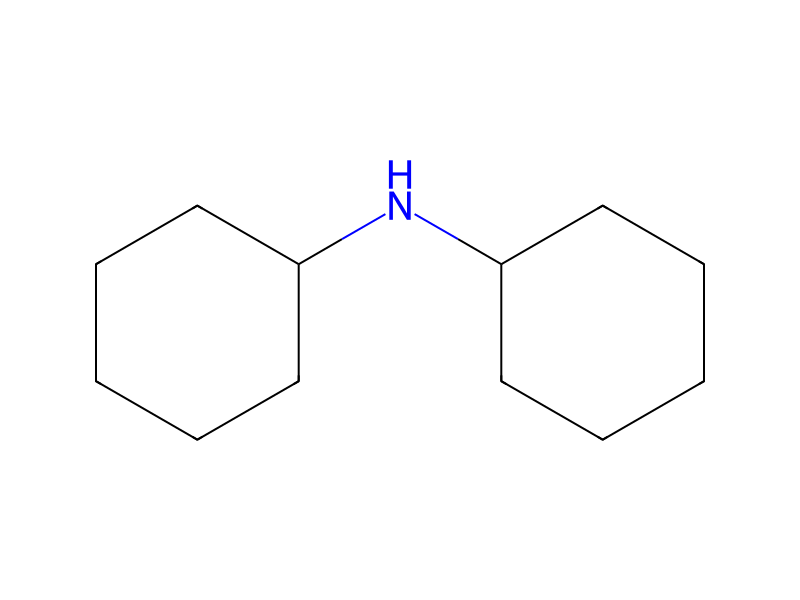
Dicyclohexylamine → HCID 18625054, compound
Reaction equation

[N+:1]([C:4]1[CH:11]=[CH:10][CH:9]=[C:8]([N+:12]([O-:14])=[O:13])[C:5]=1[CH2:6][OH:7])([O-:3])=[O:2].[F:15][C:16]([F:28])([F:27])[C:17]1[CH:22]=[CH:21][C:20]([S:23](Cl)(=[O:25])=[O:24])=[CH:19][CH:18]=1.C1(NC2CCCCC2)CCCCC1>>[F:28][C:16]([F:15])([F:27])[C:17]1[CH:18]=[CH:19][C:20]([S:23]([O:7][CH2:6][C:5]2[C:4]([N+:1]([O-:3])=[O:2])=[CH:11][CH:10]=[CH:9][C:8]=2[N+:12]([O-:14])=[O:13])(=[O:25])=[O:24])=[CH:21][CH:22]=1Participants
4


Procedure
The procedure of Example 11 was employed except that the reagents were 2.00 g of 2,6-dinitrobenzyl alcohol, 2.71 g of 4-(trifluoromethyl)benzenesulfonyl chloride and 2.2 mL of dicylohexylamine. The crude product was recrystallized using carbon tetrachloride/chloroform to give 1.55 g (38% yield) of white crystals.
Workup
- customThe crude product was recrystallized
Sources & evidence
- ORD record
- ord-c08db09b04ad401f89341f5e36a4cbbf
- Source dataset
- uspto-grants-1992_08
- Patent number
- US05135838
Reaction notes
Loading…