N-Acetylsulfanilyl chloride → HCID 86746051, compound
Reaction equation

C([NH:4][C:5]1C=CC=[CH:7][C:6]=1S(Cl)(=O)=O)(=O)C.[OH-].[Na+].S(Cl)(Cl)(=O)=O.C([NH:25][C:26]1[CH:31]=[CH:30][C:29]([S:32](Cl)(=[O:34])=[O:33])=[CH:28][CH:27]=1)(=O)C>O.O1CCCC1>[S:32]([NH2:4])(=[O:34])([C:29]1[CH:30]=[CH:31][C:26]([NH2:25])=[CH:27][CH:28]=1)=[O:33].[CH2:5]([NH2:4])[CH:6]=[CH2:7]Participants


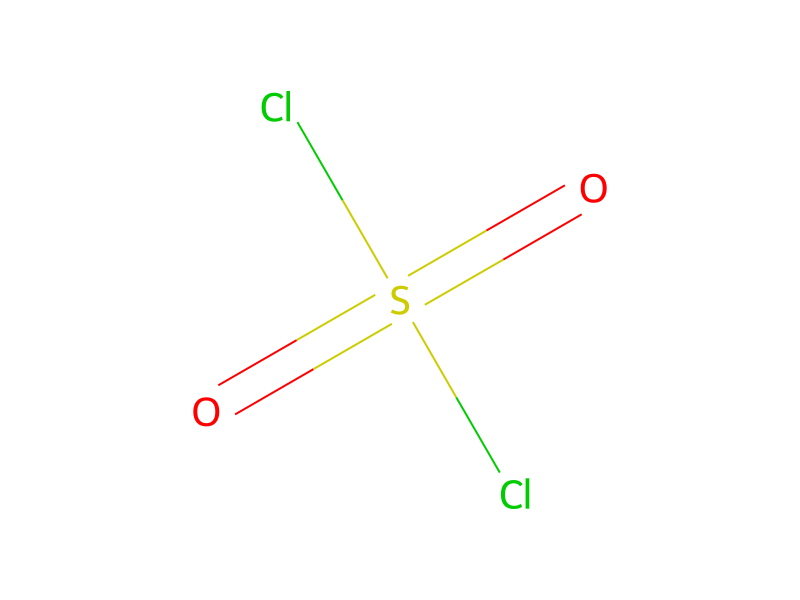




Procedure
Poly(allylamine sulfanilamide) is synthesized from poly(allylamine) and acetamidobenzenesulfonyl chloride by a variation of a method developed by Dawson, Gless & Wingard, Jr. [98 JACS 5996 (1970)] for the synthesis of polysulfanilamide. 1.66 g of poly(allylamine) which contained 17.6 mmol of amine groups were dissolved in 14 ml of water. 1.5 ml of 8 N NaOH were added to bring the pH to 10. 7 ml of tetrahydrofuran (THF) were added to promote co-solubility of the polymer and sulfonyl chloride during reaction. 1.51 g of p-acetamidobenzenesulfonyl chloride was added to the stirred solution, and 8 N NaOH was added as required to maintain the pH between 9 and 10. After 5 min. a further 1.51 g of the p-acetamidobenzenesulfonyl chloride was added, along with 7 ml of THF. This procedure was repeated a third time. The solution separated into two phases, a lower water-rich phase, and an upper THF-rich phase containing poly(p-acetamido-N-propylbenzene-sulfonamide). The polymer was precipitated from the THF with ethanol, washed with ethanol, and dried. Recovery was 73% of the theoretical weight of the polymer. The polymer was dissolved in 30 ml of 1 N HCl and heated at reflux for 6 h. to produce the poly(allylamine sulfanilamide).
Workup
- custom[98 JACS 5996 (1970)] for the synthesis of polysulfanilamide
- customduring reaction
- additionwas added
- temperatureto maintain the pH between 9 and 10
- customThe solution separated into two phases
- additiona lower water-rich phase, and an upper THF-rich phase containing poly(p-acetamido-N-propylbenzene-sulfonamide)
- customThe polymer was precipitated from the THF with ethanol
- washwashed with ethanol
- customdried
- dissolutionThe polymer was dissolved in 30 ml of 1 N HCl
- temperatureheated
- temperatureat reflux for 6 h.
Sources & evidence
- ORD record
- ord-4441c57e71c449e8b393f92b0e06d5fd
- Source dataset
- uspto-grants-1992_08
- Patent number
- US05137833
Reaction notes
Loading…