Hydrochloric Acid → 2-Chloro-1-(2,4,5-trifluorophenyl)ethan-1-one
Reaction equation

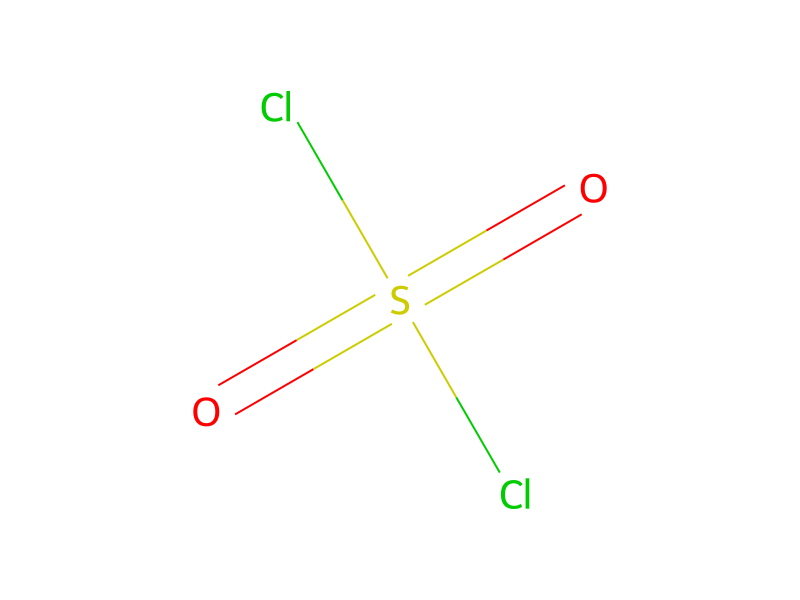
S(Cl)(Cl)(=O)=O.[CH3:6][C:7]([C:9]1[C:14]([F:15])=[CH:13][C:12]([F:16])=[C:11]([F:17])[CH:10]=1)=[O:8].[ClH:18].O>ClCCl>[F:15][C:14]1[CH:13]=[C:12]([F:16])[C:11]([F:17])=[CH:10][C:9]=1[C:7](=[O:8])[CH2:6][Cl:18]Participants
Reactant 4



Product 1

Reagents, catalysts & solvents 1

Procedure
40.8 g (0.3 mole) of sulphuryl chloride were added dropwise at room temperature (22° C.) to 48 g (0.275 mole) of 2,4,5-trifluoroacetophenone (obtained according to Example 6), dissolved in 400 ml of dichloromethane, and the mixture was stirred until the end of the evolution of hydrogen chloride (about 2 hours). 600 ml of water were then added to the reaction mixture, the organic phase was separated off, and this was washed until neutral with sodium hydrogen carbonate solution and dried over magnesium sulphate, and the solvent was stripped off in a water pump vacuum. 48.6 g of 2,4,5- trifluoro-phenacyl chloride were obtained as an oily residue, which corresponds to 84.5 % of theory. The characterization of the product carried out as in Examples 9 to 15 gave a δ value of 5.29 ppm.
Workup
- customthe organic phase was separated off
- washthis was washed until neutral with sodium hydrogen carbonate solution
- dry with materialdried over magnesium sulphate
Sources & evidence
- ORD record
- ord-c3ddf329704e4930aa9100cbdeef4d2b
- Source dataset
- uspto-grants-1992_08
- Patent number
- US05142092
Reaction notes
Loading…