(3-Bromopropyl)benzene → HCID 22910127, compound
Reaction equation

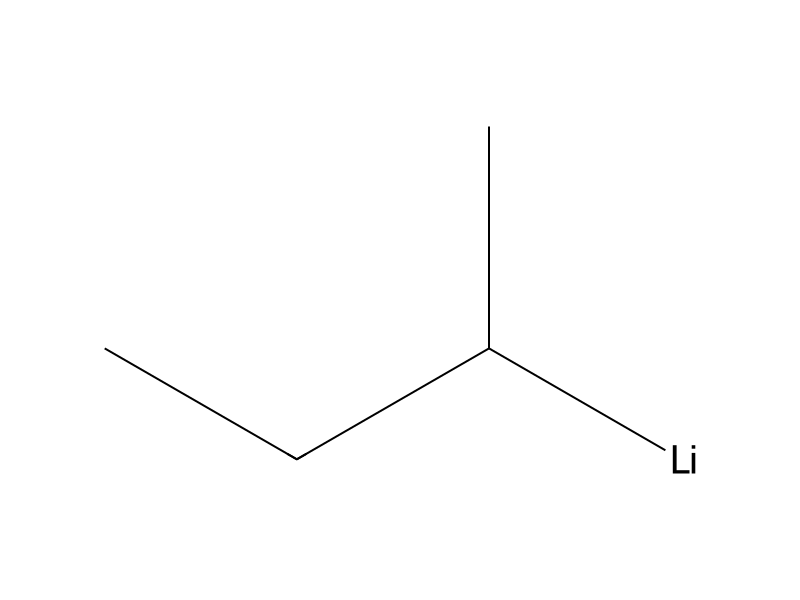
[C:1]1([CH2:7][CH2:8][CH2:9][CH:10]2[S:15][CH2:14][CH2:13][CH2:12][S:11]2)[CH:6]=[CH:5][CH:4]=[CH:3][CH:2]=1.C([Li])(CC)C.Br[CH2:22][CH2:23][CH2:24][C:25]1[CH:30]=[CH:29][CH:28]=[CH:27][CH:26]=1>O1CCCC1>[C:1]1([CH2:7][CH2:8][CH2:9][C:10]2([CH2:22][CH2:23][CH2:24][C:25]3[CH:30]=[CH:29][CH:28]=[CH:27][CH:26]=3)[S:11][CH2:12][CH2:13][CH2:14][S:15]2)[CH:2]=[CH:3][CH:4]=[CH:5][CH:6]=1Participants
Reactant 3


Product 1

Reagents, catalysts & solvents 1

Conditions
- Temperature
- -25 °C
Procedure
A solution of 1.0 g (4.2 mmol) of 2-(3-phenylpropyl)-1,3-dithiane in 25 ml of dry tetrahydrofuran was cooled to -78° C., and treated with 3.23 ml (4.2 mmol) of secbutyllithium. The resulting solution was stirred at -25° C. for 20 min, recooled to -78° C., and treated with 0.64 ml (4.2 mmol) of 1-bromo-3-phenylpropane. After being stirred at -78° C. for 15 min, the solution was allowed to stir overnight at ambient temperature. The solution was partitioned between ether and aqueous ammonium chloride, and the organic layer was washed sequentially with water, 1 M sodium bisulfite, and saturated brine, dried over MgSO4, and concentrated in vacuo to give the desired compound. 1H NMR (CDCl3) δ 65-1.9 (m, 9H), 2.18 (m, 1H), 2.55-2.75 (m, 6H), 2.78 (t, J=8 Hz, 1H), 3.40 (t, J=6 Hz, 1H), 7.1-7.35 (m, 10H). Mass spectrum (M+H)+ =357.
Workup
- customrecooled to -78° C.
- stirringAfter being stirred at -78° C. for 15 min
- stirringto stir overnight at ambient temperature
- customThe solution was partitioned between ether and aqueous ammonium chloride
- washthe organic layer was washed sequentially with water, 1 M sodium bisulfite, and saturated brine
- dry with materialdried over MgSO4
- concentrationconcentrated in vacuo
Sources & evidence
- ORD record
- ord-75087601769346d3aef001d3e13424c0
- Source dataset
- uspto-grants-1992_08
- Patent number
- US05142056
Reaction notes
Loading…