Acetone → disodium heptadecanoyl-L-aspartate
反応式

[NH2:1][C@H:2]([C:7]([OH:9])=[O:8])[CH2:3][C:4]([OH:6])=[O:5].[OH-].[Na+:11].CC(C)=O.[C:16](Cl)(=[O:33])[CH2:17][CH2:18][CH2:19][CH2:20][CH2:21][CH2:22][CH2:23][CH2:24][CH2:25][CH2:26][CH2:27][CH2:28][CH2:29][CH2:30][CH2:31][CH3:32]>O>[C:16]([NH:1][C@H:2]([C:7]([O-:9])=[O:8])[CH2:3][C:4]([O-:6])=[O:5])(=[O:33])[CH2:17][CH2:18][CH2:19][CH2:20][CH2:21][CH2:22][CH2:23][CH2:24][CH2:25][CH2:26][CH2:27][CH2:28][CH2:29][CH2:30][CH2:31][CH3:32].[Na+:11].[Na+:11]参加物



反応条件
- 温度
- 0 °C
実験手順
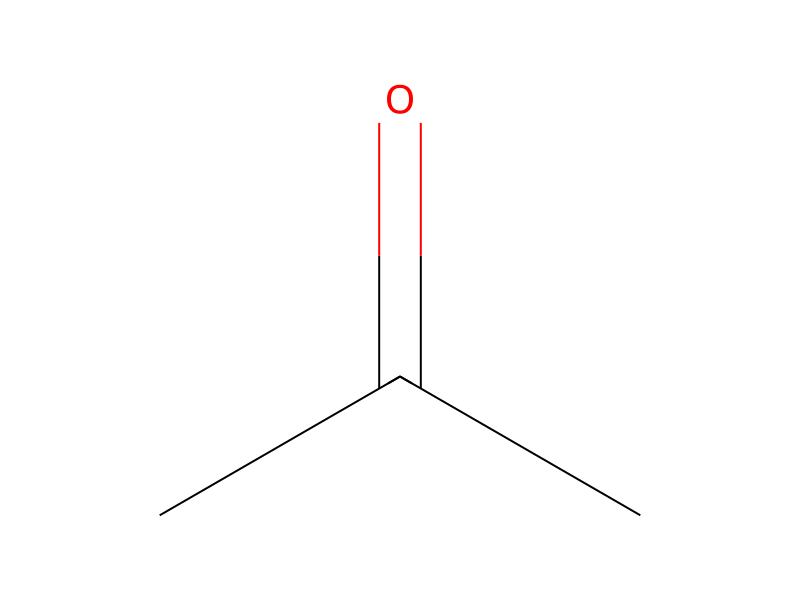
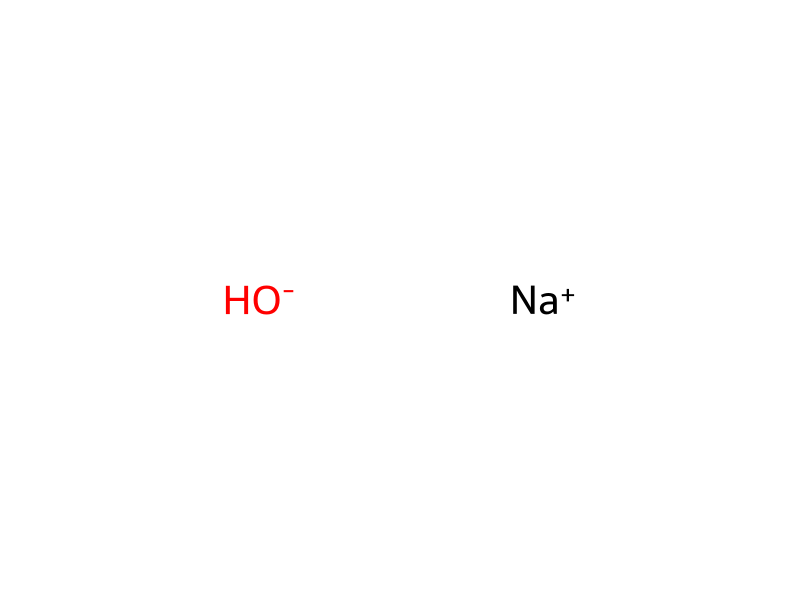
In a one L three-necked flask were placed 16.0 g (0.12 mol) of L-aspartic acid and an aqueous solution of 9.6 g (0.24 mol) of sodium hydroxide in 150 mL of water under stirring. After the L-aspartic acid was dissolved, 120 mL of acetone was added to the mixture in the flask. Then, to the resultant reaction liquid which had been cooled to 0° C. were added dropwise over a period of 30 minutes, 29.0 g (0.1 mol) of heptadecanoyl chloride and an aqueous solution of 4 g sodium hydroxide in 30 mL of water, while maintaining the reaction temperature at 0 to 5° C. and pH at 11 to 12. Thereafter, by gradually raising the temperature of the reaction liquid to room temperature (25° C.) under stirring over a period of 2 hours, a solution of disodium heptadecanoyl-L-aspartate was obtained. To the resultant solution was added 65 mL of 5N hydrochloric acid to lower the pH of the solution to 1. The crystal thus precipitated was separated from the solution by means of vacuum filtration, washed with water and dried under reduced pressure. The resultant crystal was washed with 500 mL of hexane, dried and recrystallized from a mixed solvent of ethanol/water (8:1). As a result 21.0 g (0.054 mol) of N-heptadecanoyl-L-aspartic acid was obtained in a yield of 54.3% based on the fed heptadecanoyl chloride. The physical properties of the objective N-heptadecanoyl-L-aspartic acid were as follows.
後処理
- customThen, to the resultant reaction liquid which
- additionwere added dropwise over a period of 30 minutes
- temperatureThereafter, by gradually raising
- customthe temperature of the reaction liquid to room temperature (25° C.)
出典と根拠
- ORDレコード
- ord-6cd7d4bb31cc4b66b432d38bbedef8d1
- 出典データセット
- uspto-grants-2000_01
- 特許番号
- US06010708
反応ノート
読み込み中…