Ammonia → Ammonium nitrate
Reaction equation

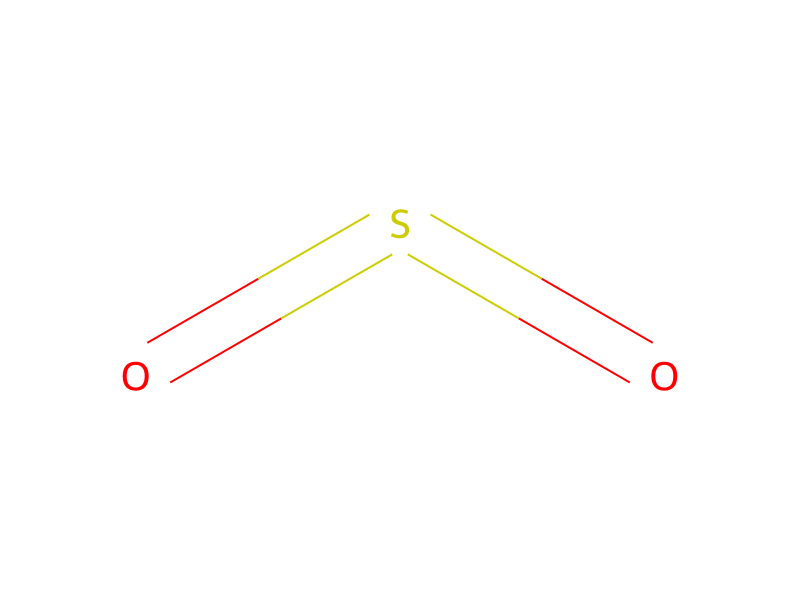
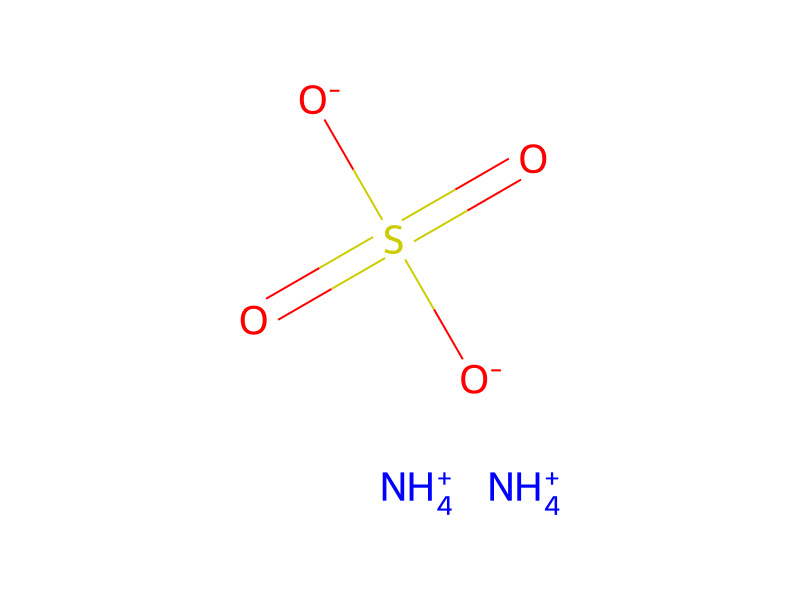
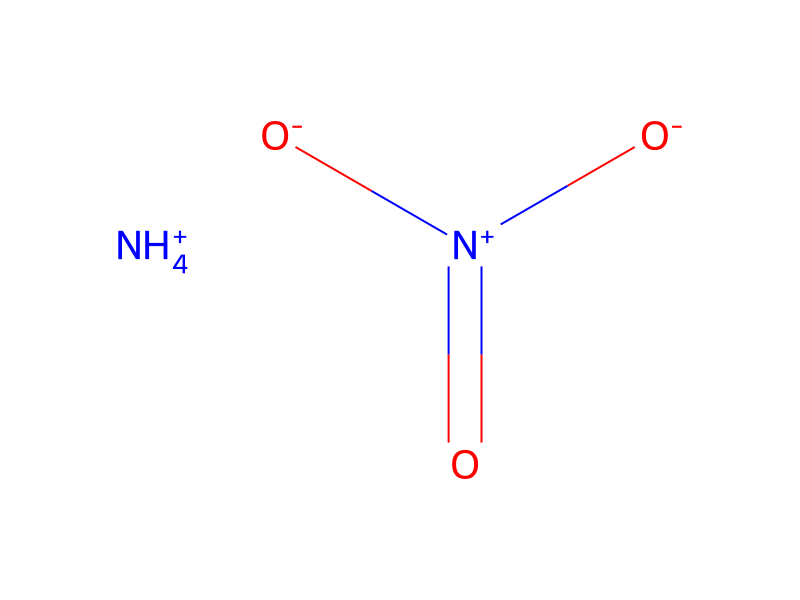
[NH3:1].[S:2]([O-:6])([O-:5])(=[O:4])=[O:3].[NH4+].[NH4+].[N+:9]([O-:12])([O-:11])=[O:10].S(=O)=O>O>[S:2]([O-:6])([O-:5])(=[O:4])=[O:3].[NH4+:9].[NH4+:1].[N+:9]([O-:12])([O-:11])=[O:10].[NH4+:9]Participants
Reactant 4


Product 2
Reagents, catalysts & solvents 1

Procedure
One commercial process uses ammonia to simultaneously remove SO2 and NOx within one reactor and produce mixed ammonium sulfate and nitrate fertilizer. This process is described in R. R. Lunt and J. D. Curic, Profiles in Flue Gas Desulfurization, 76-77, American Institute of Chemical Engineers (2000). Flue gas is first partially saturated and cooled with water to a temperature of 150°±10° F. The flue gas is subsequently mixed with ammonia and passed to the reactor where the flue gas-ammonia mixture is subjected to beams of high energy electrons to oxidize the sulfur dioxide and NOx. These oxidized species subsequently react with the ammonia to form ammonium sulfate and ammonium nitrate particulate. This process does not address the greenhouse gas (CO2) capture and removal problem. Further, the process gives an undesirable trace byproduct, ammonium sulfamate, which is harmful to crops. Finally, the process is expensive.
Workup
- customproduce
Sources & evidence
- ORD record
- ord-d9a455421800478ca60f703746c9a631
- Source dataset
- uspto-grants-2007_08
- Patent number
- US07255842B1
Reaction notes
Loading…