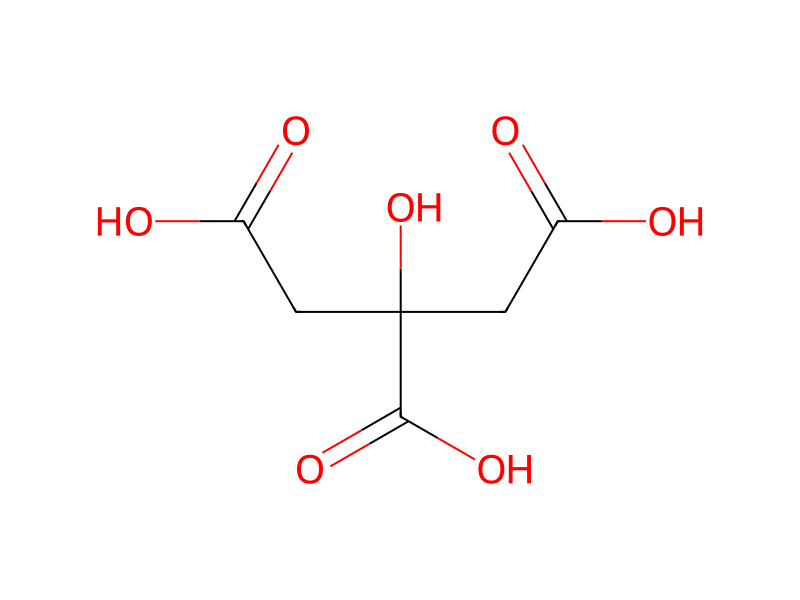
Citric Acid → HCID 86600456, compound
Reaction equation

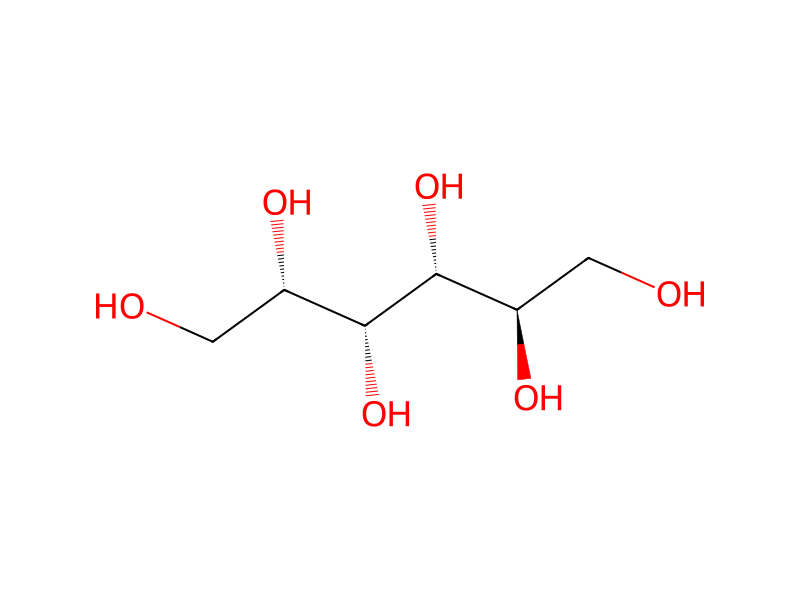
[C:1]([OH:13])(=[O:12])[CH2:2][C:3]([CH2:8][C:9]([OH:11])=[O:10])([C:5]([OH:7])=[O:6])[OH:4].[OH:14][CH2:15][C@@H:16]([C@H:18]([C@@H:20]([C@@H:22]([CH2:24][OH:25])[OH:23])[OH:21])[OH:19])[OH:17]>O>[OH:25][CH2:24][C@@H:22]([C@H:20]([C@@H:18]([C@@H:16]([CH2:15][OH:14])[OH:17])[OH:19])[OH:21])[OH:23].[C:1]([OH:13])(=[O:12])[CH2:2][C:3]([CH2:8][C:9]([OH:11])=[O:10])([C:5]([OH:7])=[O:6])[OH:4]Participants
4
Reactant 2
Product 1

Reagents, catalysts & solvents 1

Procedure
As a control experiment, we also synthesized a copolymer using a 3:1 molar ratio of citric acid to D-sorbitol, but first dissolving the reactants in water. Citric acid and D-sorbitol were dissolved in a minimal amount of water, and then dried in a force air oven at 80° C. overnight. The resulting solid was ground, then polymerized under vacuum at 150° C. The resulting polymer displayed a water absorbance index (WAI) value within experimental error of the dry synthesis (Table 1). Water solubility and acid titration values show a larger extent of reaction in this system, probably due to reaction occurring during the drying process. Overall, there appears to be little advantage to using water in this system.
Workup
- customAs a control experiment, we also synthesized a copolymer
- customdried in a force air oven at 80° C. overnight
- custompolymerized under vacuum at 150° C
- customwithin experimental error of the dry synthesis (Table 1)
- customa larger extent of reaction in this system
- customprobably due to reaction
Sources & evidence
- ORD record
- ord-1622617121704b1a9d9177177a1b7bc6
- Source dataset
- uspto-grants-2007_08
- Patent number
- US07256251B2
Reaction notes
Loading…