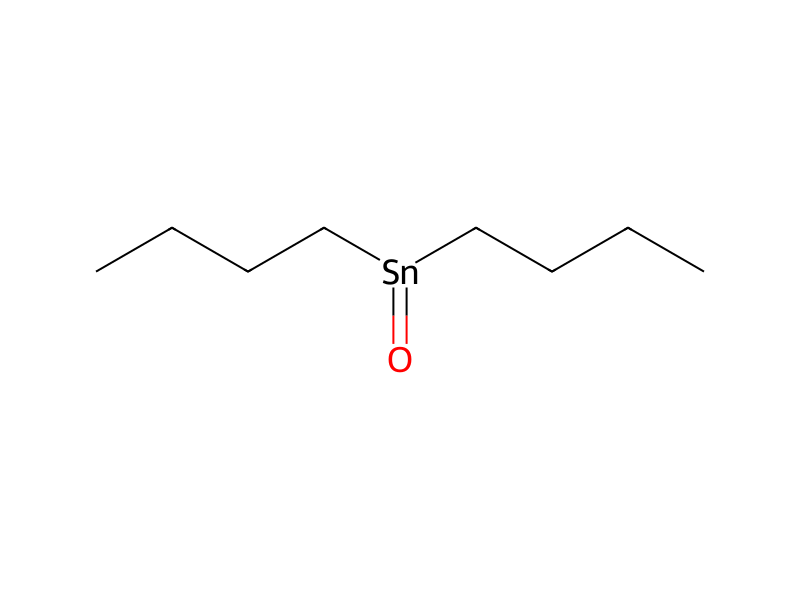
Dibutyltin oxide → HCID 178526720, compound
Reaction equation

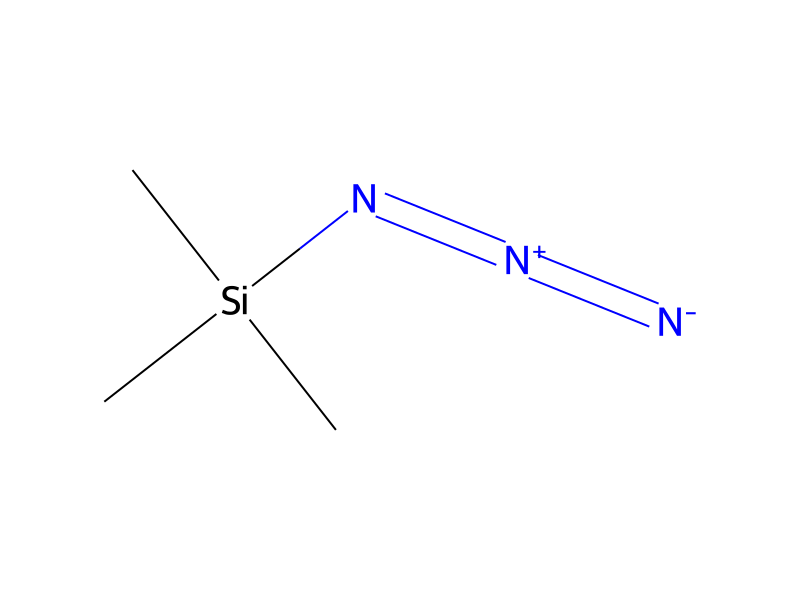
[N+:1]([C:4]1[CH:9]=[CH:8][C:7]([S:10][CH2:11][C:12]#[N:13])=[CH:6][CH:5]=1)([O-:3])=[O:2].C[Si]([N:18]=[N+:19]=[N-:20])(C)C.C([Sn](=O)CCCC)CCC>C1(C)C=CC=CC=1>[N+:1]([C:4]1[CH:5]=[CH:6][C:7]([S:10][CH2:11][C:12]2[NH:20][N:19]=[N:18][N:13]=2)=[CH:8][CH:9]=1)([O-:3])=[O:2]Participants
Reactant 3

Product 1

Reagents, catalysts & solvents 1

Procedure
To 2-[(4-nitrophenyl)sulfanyl]acetonitrile (6.8 g) was added toluene (70 ml), and to this solution was added trimethylsilylazide (8.1 g) and then, dibutyl tin oxide (VI) (0.87 g), and the mixture was heated to reflux for 6 hours. After allowing the mixture to be cooled to room temperature, the solvent was removed under reduced pressure, and azeotropically distilled with methanol. To the obtained residue was added 10% aqueous solution (50 ml) of sodium carbonate, and the mixture was washed with ethyl acetate. The pH was adjusted to about pH 3 with 6N hydrochloric acid, and the mixture was extracted with ethyl acetate. The organic layer was washed with saturated brine, and dried over magnesium sulfate. The solvent was removed under reduced pressure, and the residue was washed with hexane/ethyl acetate to give 5-[[(4-nitrophenyl)sulfanyl]methyl]-1,2,3,4-tetrazole (6.7 g).
Workup
- temperatureto reflux for 6 hours
- customthe solvent was removed under reduced pressure
- distillationazeotropically distilled with methanol
- additionTo the obtained residue was added 10% aqueous solution (50 ml) of sodium carbonate
- washthe mixture was washed with ethyl acetate
- extractionthe mixture was extracted with ethyl acetate
- washThe organic layer was washed with saturated brine
- dry with materialdried over magnesium sulfate
- customThe solvent was removed under reduced pressure
- washthe residue was washed with hexane/ethyl acetate
Sources & evidence
- ORD record
- ord-1e0bb7f84bc3459c9092e1f4c584320e
- Source dataset
- uspto-grants-2007_08
- Patent number
- US07262185B2
Reaction notes
Loading…