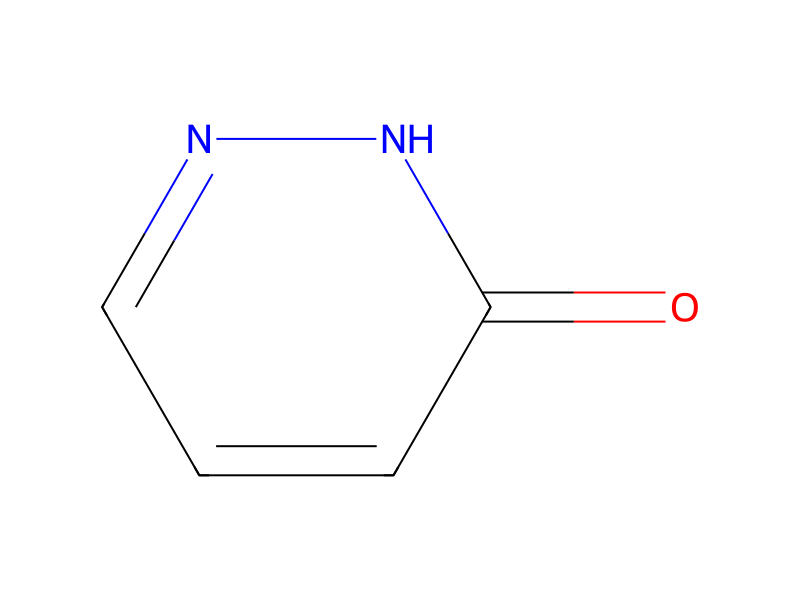
3(2H)-Pyridazinone → 2-{6-[2-(2-methyl-pyrrolidin-1-yl)-ethyl]-naphthalen-2-yl}-2H-pyridazin-3-one
Reaction equation

Br[C:2]1[CH:3]=[C:4]2[C:9](=[CH:10][CH:11]=1)[CH:8]=[C:7]([CH2:12][CH2:13][N:14]1[CH2:18][CH2:17][CH2:16][CH:15]1[CH3:19])[CH:6]=[CH:5]2.[N:20]1[NH:21][C:22](=[O:26])[CH:23]=[CH:24][CH:25]=1>>[CH3:19][CH:15]1[CH2:16][CH2:17][CH2:18][N:14]1[CH2:13][CH2:12][C:7]1[CH:8]=[C:9]2[C:4](=[CH:5][CH:6]=1)[CH:3]=[C:2]([N:21]1[C:22](=[O:26])[CH:23]=[CH:24][CH:25]=[N:20]1)[CH:11]=[CH:10]2Participants


Procedure
One process for the preparation of 2-{6-[2-(2-methyl-pyrrolidin-1-yl)-ethyl]-naphthalen-2-yl}-2H-pyridazin-3-one, which demonstrates activity as a histamine-3 receptor ligand, involves treating an inexpensive and readily available starting material, 6-bromo-naphthalen-2-ol, to afford 2-{6-[2-(2-methyl-pyrrolidin-1-yl)-ethyl]-naphthalen-2-yl}-2H-pyridazin-3-one. Briefly, the process involves providing 6-bromo-naphthalen-2-ol. Preparing the triflate, or trifluoromethansulfonic acid ester, of 6-bromo-naphthalen-2-ol (2) with trifluoromethanesulfonic anhydride or another suitable trifluoromethanesulfonic reagent. The resulting trifluoro-methanesulfonic acid 6-bromo-naphthalen-2-yl ester (2) is converted to 2-bromo-6-vinyl-naphthalene (3) via a Pd-catalyzed Suzuki cross-coupling reaction. The 2-bromo-6-vinyl-naphthalene is reacted with a 2-methylpyrrolidine anion generated with n-butyllithium to provide 1-[2-(6-bromo-naphthalen-2-yl)-ethyl]-2-methyl-pyrrolidine (4). Compound (4) is reacted with 2H-pyridazin-3-one to provide the desired 2-{6-[2-(2-methyl-pyrrolidin-1-yl)-ethyl]-naphthalen-2-yl}-2H-pyridazin-3-one (5).
Sources & evidence
- ORD record
- ord-334fa1d144b94f14b53765598e11a4f4
- Source dataset
- uspto-grants-2006_12
- Patent number
- US07145005B2
Reaction notes
Loading…