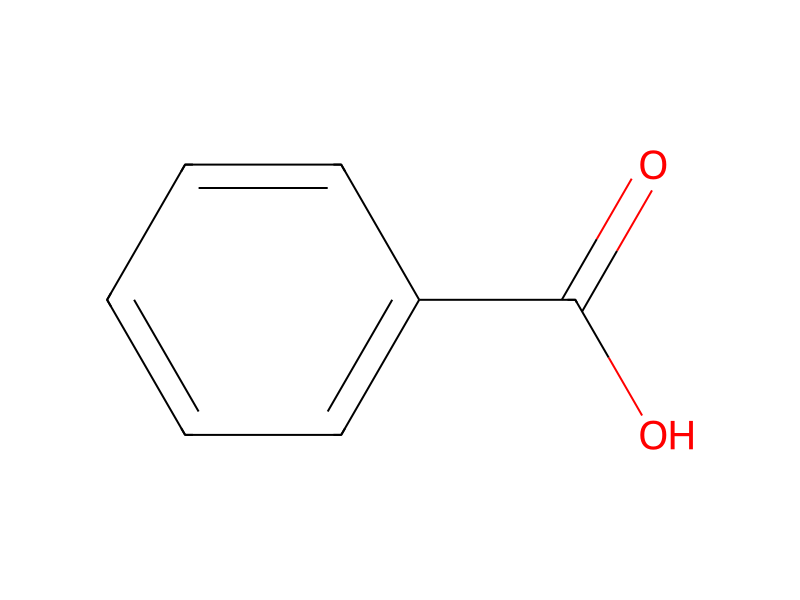
Carbon Dioxide → Benzoic Acid
Reaction equation

[C:1]([C:4]1[C:9](F)=[CH:8][C:7](C2C=CC3C(=CC=C([C@H]4CC[C@H](CCC)CC4)C=3)C=2)=[CH:6][C:5]=1F)(=[O:3])N.FC1C2C(=CC([C@H]3CC[C@H](CCC)CC3)=CC=2)C=CC=1C1C=C(F)C=C(F)C=1.C([Li])CCC.C(=O)=[O:65]>>[C:1]([OH:3])(=[O:65])[C:4]1[CH:9]=[CH:8][CH:7]=[CH:6][CH:5]=1Participants




Procedure
10 g of 2-(4-carbamoyl-3,5-difluorophenyl)-6-(trans-4-propylcyclohexyl)naphthalene (synthesized by lithioating 1-fluoro-2-(3,5-difluorophenyl)-6-(trans-4-propylcyclohexyl)naphthalene obtained in Example 5 with butyl lithium, blowing carbon dioxide through the material to produce benzoic acid, reacting the product with thionyl chloride to produce acid chloride, and then blowing ammonia gas through the material) was dissolved in 40 ml of DMF. To the solution was then added 2.5 ml of phosphorus oxychloride. The reaction mixture was then allowed to undergo reaction at a temperature of 25° C. for 2 hours. The reaction solution was then poured into ice water. To the reaction solution was then added diluted hydrochloric acid. The resulting aqueous phase was then extracted with toluene. The material thus extracted and the organic phase were together washed with water, saturated aqueous solution of sodium bicarbonate and saturated brine, and then dehydrated and dried over anhydrous sodium sulfate. The residue was purified through silica gel column chromatography (hexane/dichloromethane=6/4), and then recrystallized from ethanol to obtain 7.4 g of 1-fluoro-2-(3,5-difluoro-4-cyanophenyl)-6-(trans-4-propylcyclohexyl)naphthalene.
Sources & evidence
- ORD record
- ord-98acb46da20f4b718d5d7cc21a3d2352
- Source dataset
- uspto-grants-2006_12
- Patent number
- US07145047B2
Reaction notes
Loading…