Benzoic Acid → Quinoline Yellow
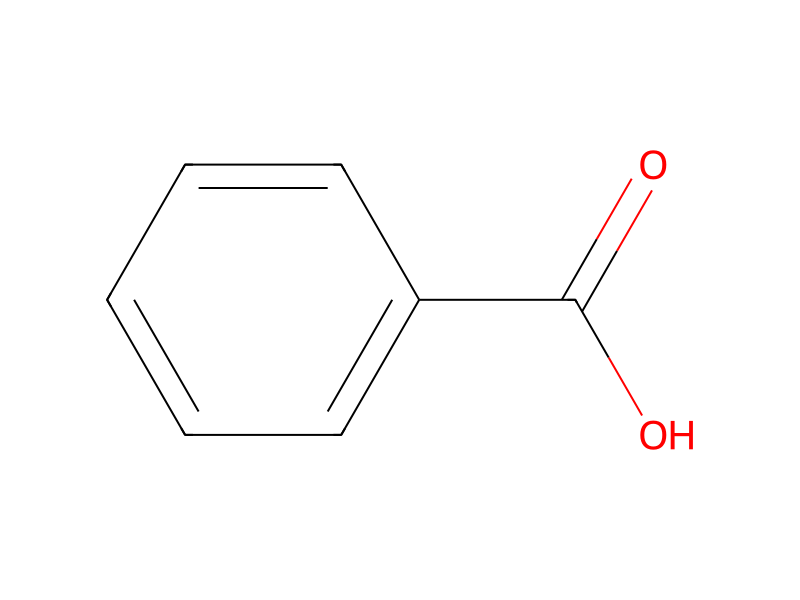
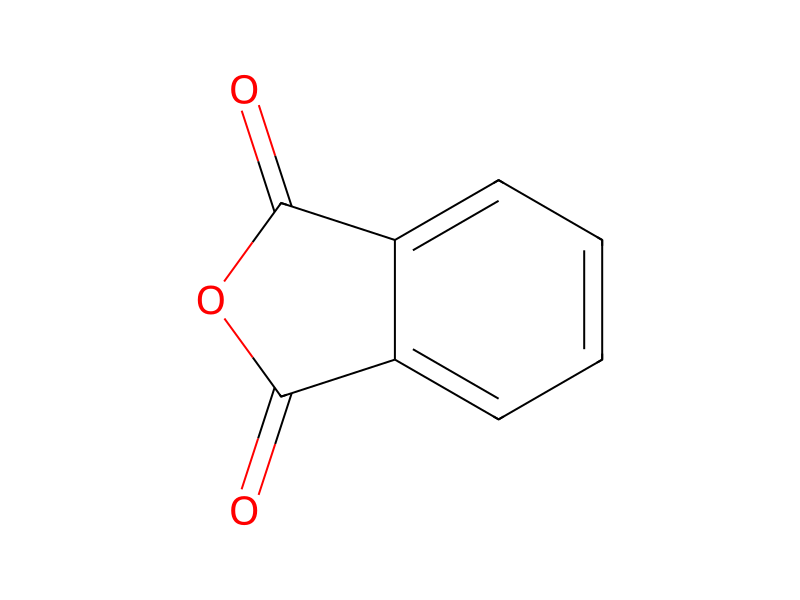
Reaction equation

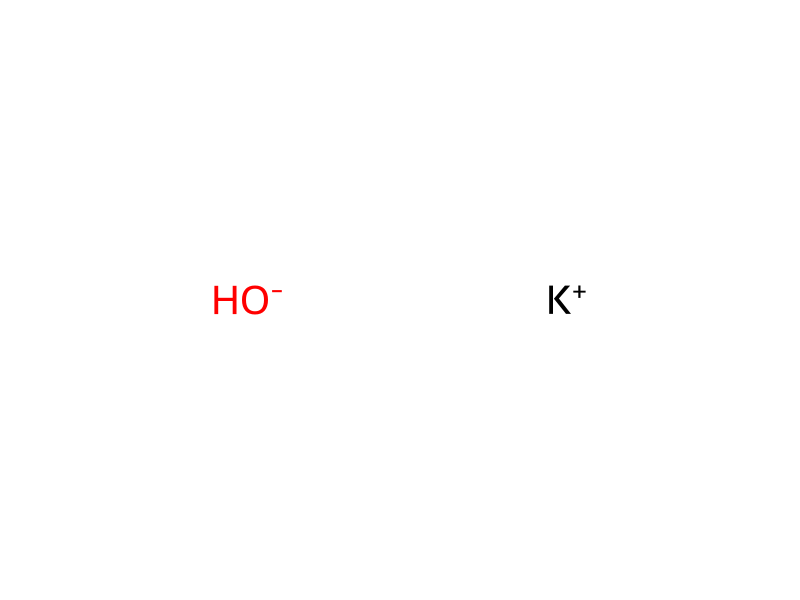
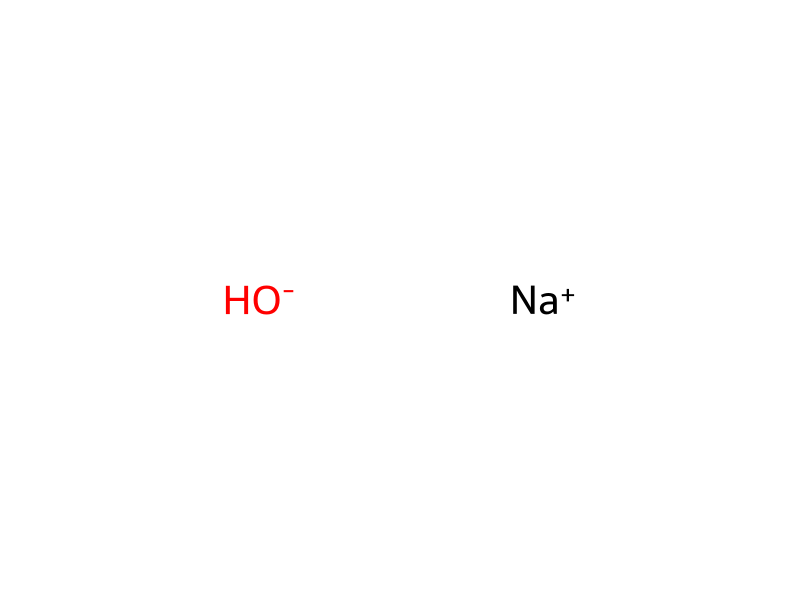
C(O)(=O)C1C=CC=CC=1.[C:10]1(=[O:20])[O:15][C:13](=O)[C:12]2=[CH:16][CH:17]=[CH:18][CH:19]=[C:11]12.[N:21]1[C:31]2[C:26](=[CH:27][CH:28]=[CH:29][CH:30]=2)[CH:25]=[CH:24][C:22]=1[CH3:23].[OH-].[Na+].[OH-].[K+]>O>[CH:28]1[CH:27]=[C:26]2[CH:25]=[CH:24][C:22]([CH:23]3[C:10](=[O:20])[C:11]4[C:12](=[CH:16][CH:17]=[CH:18][CH:19]=4)[C:13]3=[O:15])=[N:21][C:31]2=[CH:30][CH:29]=1Participants
Reactant 5

Product 1

Reagents, catalysts & solvents 1
Conditions
- Temperature
- 165 °C
Procedure
For example, the benzoic acid and the phthalic anhydride of the formula (5) are heated and molten at a temperature of at least 130° C. and then the quinaldine is added. In this reaction, the quinaldine and the phthalic anhydride are generally used in a molar ratio of from 1:1 to 1:5. Further, the quinaldine and the benzoic acid are generally used in a molar ratio of from 1:2 to 1:20. The molar ratio between the quinaldine and the benzoic acid can be increased or decreased according to the stirring state of the reaction mixture. After the raw materials are molten, the mixture is heated to 150 to 180° C. and stirred for 3 to 8 hours. In this case, it is possible to determine the termination point of the reaction by carrying out component analysis of the reaction mixture according to a high performance liquid chromatograph or other methods. After the termination of the reaction, the reaction mixture is cooled to 130 to 150° C. The cooled mixture is diluted with water as required. Then, an alkali aqueous solution such as an aqueous solution of 5 to 20% by weight of sodium hydroxide or potassium hydroxide is added. The benzoic acid is converted into a water-soluble alkali metal salt by the above operation, and the water-soluble alkali metal salt can be separated from a generated quinophthalone compound by means of filtration. Then, washing is carried out with water, followed by drying, whereby the quinophthalone compound which is used for forming the quinophthalone residue of the formula (4) can be obtained.
Workup
- custommolten at a temperature of at least 130° C.
- customIn this reaction
- customthe termination point of the reaction
- customAfter the termination of the reaction
- temperaturethe reaction mixture is cooled to 130 to 150° C
- customthe water-soluble alkali metal salt can be separated from a generated quinophthalone compound by means of filtration
- washThen, washing
- customby drying
Sources & evidence
- ORD record
- ord-6826fd3e7a0c4479aa73f0c53d8e7b47
- Source dataset
- uspto-grants-2006_12
- Patent number
- US07147704B2
Reaction notes
Loading…