4-Bromobenzaldehyde → 4'-Chloro[1,1'-biphenyl]-4-carbaldehyde
Reaction equation

[Cl:1][C:2]1[CH:7]=[CH:6][C:5](B(O)O)=[CH:4][CH:3]=1.Br[C:12]1[CH:19]=[CH:18][C:15]([CH:16]=[O:17])=[CH:14][CH:13]=1>C(COC)OC>[Cl:1][C:2]1[CH:7]=[CH:6][C:5]([C:12]2[CH:19]=[CH:18][C:15]([CH:16]=[O:17])=[CH:14][CH:13]=2)=[CH:4][CH:3]=1Participants
4
Reactant 2
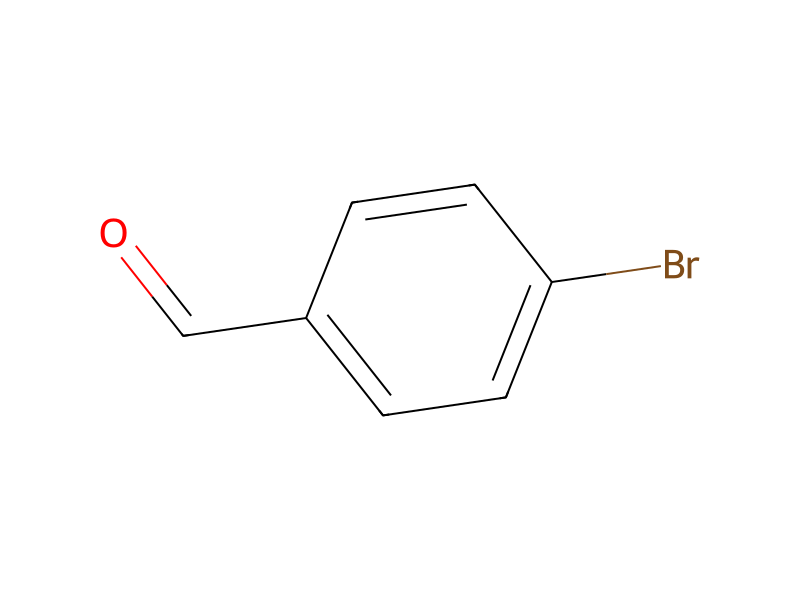

Product 1

Reagents, catalysts & solvents 1

Procedure
A mixture of 4-chlorobenzeneboronic acid (19.4 g, 1 equiv), 4-bromobenzaldehyde (22.9 g, 1 equiv), palladium(H) acetate (1.4 g, 0.05 equiv) aqueous sodium carbonate (30.3 g in 144 ml solution, 2 equiv) and dimethoxyethane (500 ml) was stirred at reflux under argon for 2.5 h, then evaporated to low volume and diluted with dichloromethane: Workup continued as in (a) above to give identical material (25.2 g, 94%). 1H-NMR (CDCl3) δ 10.05 (1H, s), 7.96 (2H, d), 7.73 (2H, d), 7.57 (2H, d), 7.46 (2H, d); MS (AP+) found (M+1)=217, C13H935ClO requires 216.
Workup
- temperatureat reflux under argon for 2.5 h
- customevaporated to low volume
- additiondiluted with dichloromethane
Sources & evidence
- ORD record
- ord-56eae8c4e13a46aaa4079add8a4ee809
- Source dataset
- uspto-grants-2006_12
- Patent number
- US07153861B2
Reaction notes
Loading…