Phenyl benzoate → Methyl Benzoate
Reaction equation

[C:1]([O:9][C:10]1[CH:15]=[CH:14][CH:13]=[CH:12][CH:11]=1)(=[O:8])[C:2]1[CH:7]=[CH:6][CH:5]=[CH:4][CH:3]=1.C(=O)(OC)OC.C(=O)(OC1C=CC=CC=1)OC.C(=O)(OC1C=CC=CC=1)OC1C=CC=CC=1>[O-]C1C=CC=CC=1.[O-]C1C=CC=CC=1.[O-]C1C=CC=CC=1.[O-]C1C=CC=CC=1.[Ti+4]>[C:1]([O:9][C:10]1[CH:15]=[CH:14][CH:13]=[CH:12][CH:11]=1)(=[O:8])[C:2]1[CH:3]=[CH:4][CH:5]=[CH:6][CH:7]=1.[C:1]([O:9][CH3:10])(=[O:8])[C:2]1[CH:7]=[CH:6][CH:5]=[CH:4][CH:3]=1Participants




Procedure
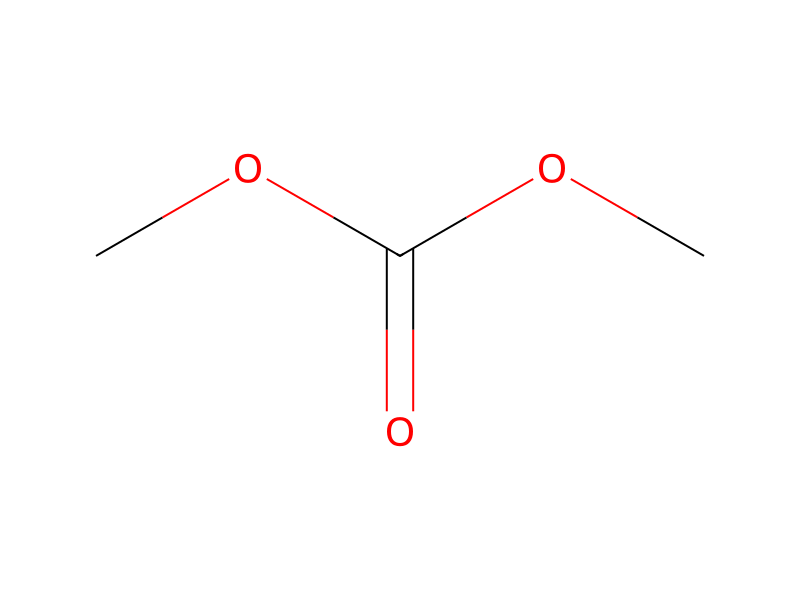
Phenyl benzoate was synthesized using the same method as in Example 9. Next, into an autoclave made of SUS316 having an internal volume of 100 ml were charged the synthesized phenyl benzoate 30 g (151 mmole), dimethyl carbonate 6.82 g (75.7 mmole) and titanium tetraphenoxide 0.02 g (0.045 mmole). After replacing the air with nitrogen, the autoclave was sealed and the contents were reacted for two hours at 200° C. After completing the reaction, the reaction mixture was analyzed by gas chromatography. As a result, the yield of methyl phenyl carbonate was 15%, and the yield of diphenyl carbonate was 4%. Furthermore, at the same time, methyl benzoate was produced as a by-product with a yield of 19% (the yield is given in terms of phenyl benzoate).
Workup
- customthe autoclave was sealed
- customthe contents were reacted for two hours at 200° C
- customthe reaction
Sources & evidence
- ORD record
- ord-02d92e4c7e2347a6933ee5d6a97eea61
- Source dataset
- uspto-grants-1998_02
- Patent number
- US05714627
Reaction notes
Loading…