Diphenyl carbonate → Methyl 4-methylbenzoate
Reaction equation

[C:1]1([CH3:16])[CH:6]=[CH:5][C:4]([C:7]([O:9][C:10]2C=CC=CC=2)=[O:8])=[CH:3][CH:2]=1.C(=O)(OC)OC.C(=O)(OC1C=CC=CC=1)OC.C(=O)(OC1C=CC=CC=1)OC1C=CC=CC=1>CC(C)[O-].CC(C)[O-].CC(C)[O-].CC(C)[O-].[Ti+4]>[C:1]1([CH3:16])[CH:2]=[CH:3][C:4]([C:7]([O:9][CH3:10])=[O:8])=[CH:5][CH:6]=1Participants
6



Procedure
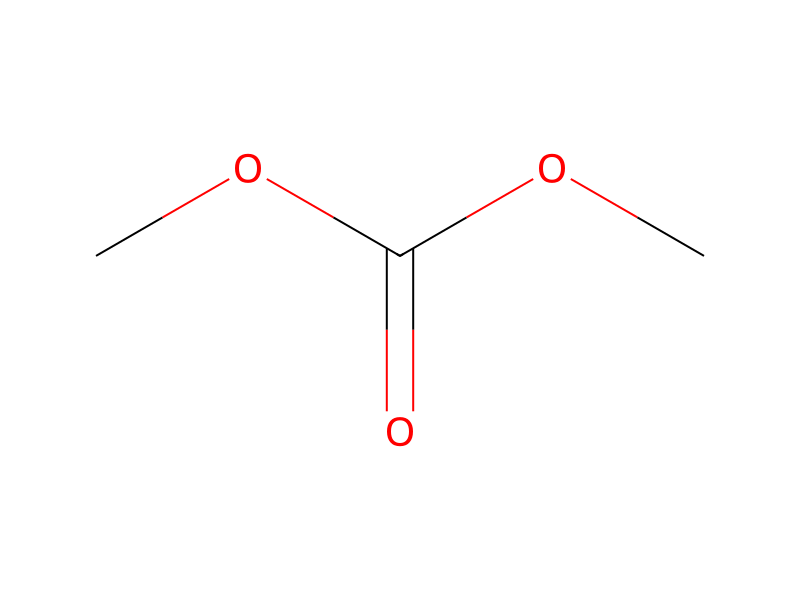
Into an autoclave made of SUS316 having an internal volume of 100 ml were charged the synthesized phenyl p-toluate 30 g (141 mmole), dimethyl carbonate 6.37 g (70.7 mmole) and titanium tetraisopropoxide 0.80 g (2.83 mmole). The pressure was elevated to 20 kg/cm2 with nitrogen, and the contents were then reacted for three hours at 180° C. After completing the reaction, the reaction mixture was analyzed by gas chromatography. As a result, the yield of methyl phenyl carbonate was 18%, and the yield of diphenyl carbonate was 15%. Furthermore, at the same time, methyl p-toluate was produced as a by-product with a yield of 33% (the yield is given in terms of phenyl p-toluate).
Workup
- customthe contents were then reacted for three hours at 180° C
- customthe reaction
Sources & evidence
- ORD record
- ord-1be5ddf35f2f412190bebfbab557a239
- Source dataset
- uspto-grants-1998_02
- Patent number
- US05714627
Reaction notes
Loading…