Formaldehyde → HCID 20319374, compound
Reaction equation

C1(N(C(N)=O)N)C=CC=CC=1.[Cl:12][C:13]1[CH:14]=[C:15]([N:20]([C:29]([N:31]([CH3:33])[CH3:32])=[O:30])[N:21]=[CH:22]C2C=CC=CC=2)[CH:16]=[CH:17][C:18]=1[F:19].ClC1C=C(NN=CC2C=CC=CC=2)C=CC=1F.CN(C)C(Cl)=O.ClC1C=C(N(C(N(C)C)=O)N)C=CC=1F.C=O>>[Cl:12][C:13]1[CH:14]=[C:15]([N:20]([C:29]([N:31]([CH3:33])[CH3:32])=[O:30])[N:21]=[CH2:22])[CH:16]=[CH:17][C:18]=1[F:19]Participants
7
Reactant 6

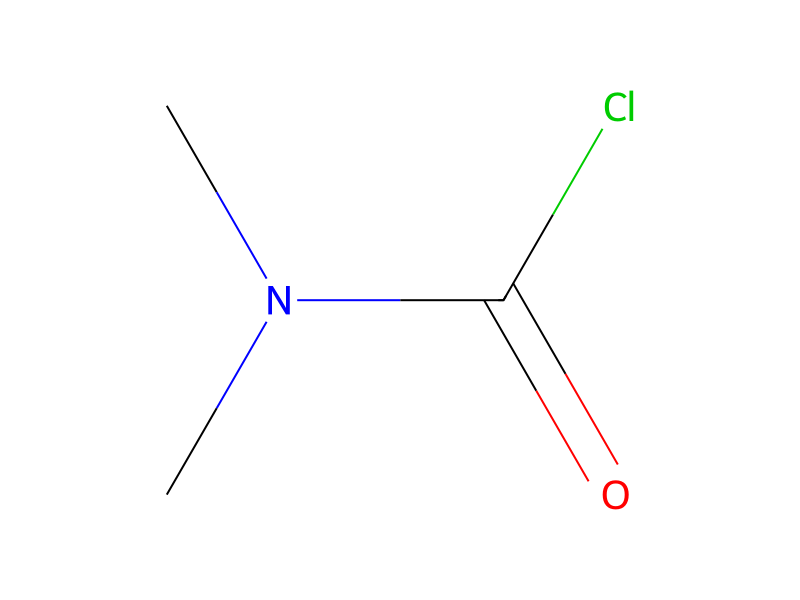


Product 1

Procedure
A suitable method for preparing the 2-phenylsemicarbazones comprises converting a 2-phenylsemicarbazone of one specific aldehyde into a 2-phenyl-semicarbazone of a different aldehyde by hydrolyzing the initially prepared 2-phenylsemicarbazone into the corresponding 2-phenylsemicarbazide which is then reacted with the desired aldehyde. For example, benzaldehyde 2-(3-chloro-4-fluorophenyl)-4,4-dimethylsemicarbazone prepared e.g., from benzaldehyde 3-chloro-4-fluorophenylhydrazone and dimethylcarbamoyl chloride is hydrolyzed to 2-(3-chloro-4-fluorophenyl)-4,4-dimethylsemicarbazide which is reacted with formaldehyde to give formaldehyde 2-(3-chloro-4-fluorophenyl)-4,4-dimethylsemicarbazone.
Sources & evidence
- ORD record
- ord-d901976963b54d30a2e0048aa6a6af04
- Source dataset
- uspto-grants-1978_07
- Patent number
- US04099956
Reaction notes
Loading…