1,6-Dibromohexane → 2,7-Dibromo-9,9-bis(6-bromohexyl)-9H-fluorene
Reaction equation

[Br:1][C:2]1[CH:14]=[CH:13][C:12]2[C:11]3[C:6](=[CH:7][C:8]([Br:15])=[CH:9][CH:10]=3)[CH2:5][C:4]=2[CH:3]=1.Br[CH2:17][CH2:18][CH2:19][CH2:20][CH2:21][CH2:22][Br:23].[OH-].[K+]>[Br-].C([N+](CCCC)(CCCC)CCCC)CCC>[Br:1][C:2]1[CH:14]=[CH:13][C:12]2[C:11]3[C:6](=[CH:7][C:8]([Br:15])=[CH:9][CH:10]=3)[C:5]([CH2:10][CH2:11][CH2:12][CH2:4][CH2:3][CH2:2][Br:1])([CH2:17][CH2:18][CH2:19][CH2:20][CH2:21][CH2:22][Br:23])[C:4]=2[CH:3]=1Participants
5
Reactant 3
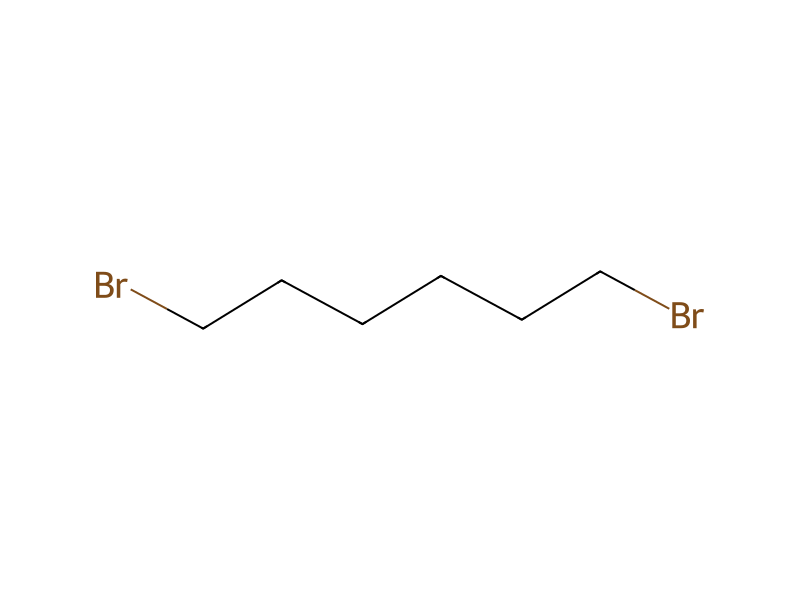


Product 1

Reagents, catalysts & solvents 1

Procedure
The reaction of 2,7-dibromo-9H-fluorene with 1,6-dibromohexane in the presence of potassium hydroxide and phase transfer catalyst tetra butyl ammonium bromide afforded 2,7-dibromo-9,9-bis(6-bromohexyl)-9H-fluorene in a yield of 75% after purification with columnar chromatography.
Sources & evidence
- ORD record
- ord-0ee5fd893fc14e808ca826e4f117f41c
- Source dataset
- uspto-grants-2015_03
- Patent number
- US08969509B2
Reaction notes
Loading…