Piperazine → 1,1-dimethylethyl [(1S)-3-methyl-1-(1-piperazinylcarbonyl)butyl]carbamate
Reaction equation

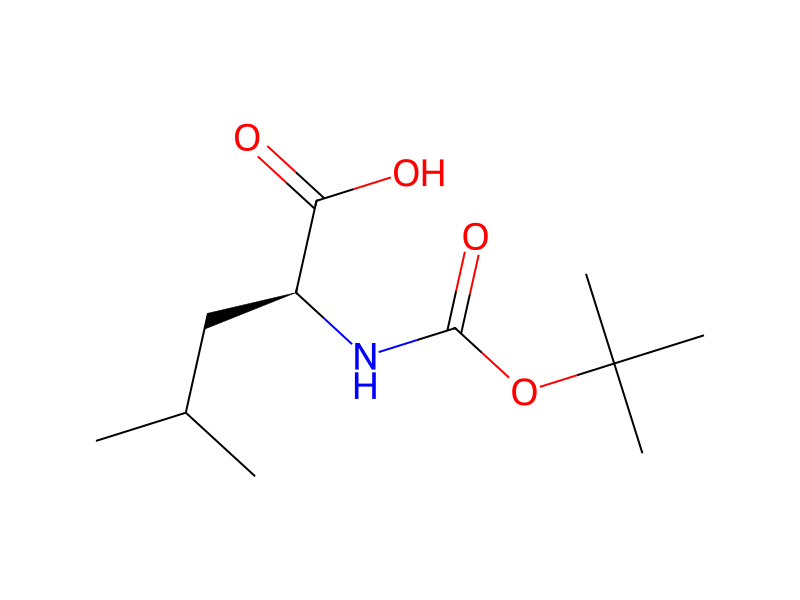
[C:1]([O:5][C:6]([NH:8][C@@H:9]([CH2:13][CH:14]([CH3:16])[CH3:15])[C:10]([OH:12])=O)=[O:7])([CH3:4])([CH3:3])[CH3:2].[NH:17]1[CH2:22][CH2:21][NH:20][CH2:19][CH2:18]1.C1CCC(N=C=NC2CCCCC2)CC1>C(Cl)Cl>[C:1]([O:5][C:6](=[O:7])[NH:8][C@@H:9]([CH2:13][CH:14]([CH3:16])[CH3:15])[C:10](=[O:12])[N:17]1[CH2:22][CH2:21][NH:20][CH2:19][CH2:18]1)([CH3:2])([CH3:3])[CH3:4]Participants
5




Procedure
To 1.00 g (4.33 mmol) of (S)-2-((tert-butoxycarbonyl)amino)-4-methylpentanoic acid was added 750 mg (8.66 mmol) of piperazine, 20 mL of DCM, 1.34 g (6.5 mmol) of DCC and 17.9 mL (12.99 mmol) of TEA. This was allowed to stir overnight at room temperature. The next morning, it was diluted with more DCM, and filtered. The filtrate was concentrated and purified in the ISCO using a 40 gram column and eluting with 0-10% MeOH/DCM to obtain the desired product in 79% yield.
Workup
- filtrationfiltered
- concentrationThe filtrate was concentrated
- custompurified in the ISCO
- washeluting with 0-10% MeOH/DCM
Sources & evidence
- ORD record
- ord-aca8d526467f4a878ebe12555648492d
- Source dataset
- uspto-grants-2015_03
- Patent number
- US08969565B2
Reaction notes
Loading…