Lithium iodide → 2,6-Dichloro-4-cyanobenzoic acid
Reaction equation

[Cl:1][C:2]1[CH:11]=[C:10]([C:12]#[N:13])[CH:9]=[C:8]([Cl:14])[C:3]=1[C:4]([O:6]C)=[O:5].[I-].[Li+]>N1C=CC=CC=1>[Cl:1][C:2]1[CH:11]=[C:10]([C:12]#[N:13])[CH:9]=[C:8]([Cl:14])[C:3]=1[C:4]([OH:6])=[O:5]Participants
4
Reactant 2
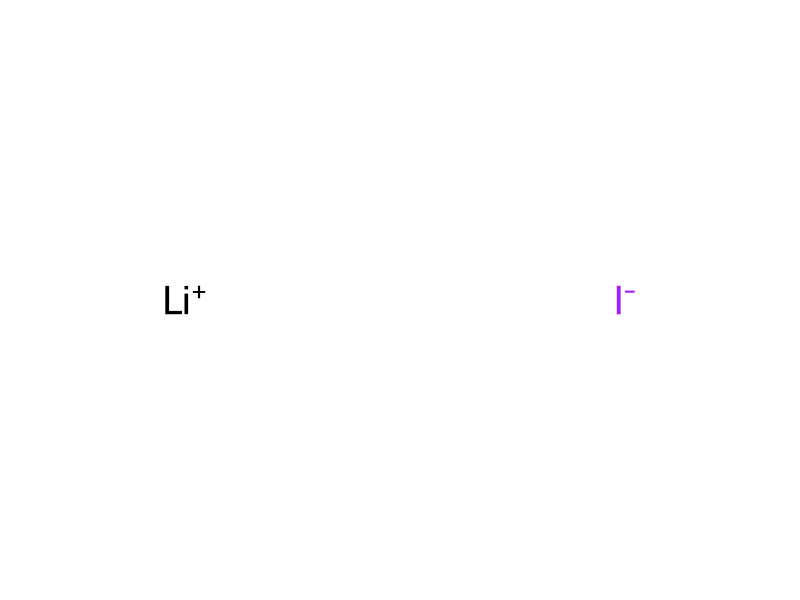

Product 1

Reagents, catalysts & solvents 1

Procedure
A suspension of methyl 2,6-dichloro-4-cyanobenzoate (620 mg, 2.6 mmol) in pyridine (5 mL) was treated with anhydrous lithium iodide (1000 mg, 8 mmol). The resulting reaction mixture was stirred at reflux for 1 hour and concentrated under vacuum to remove pyridine. The residue was acidified with hydrochloric acid (2N) under ice-cold condition to adjust the pH between 2 to 3. The precipitated solid was filtered, washed with water and dried to yield 2,6-dichloro-4-cyanobenzoic acid (380 mg, 86%) as a pale brown solid.
Workup
- customThe resulting reaction mixture
- temperatureat reflux for 1 hour
- concentrationconcentrated under vacuum
- customto remove pyridine
- filtrationThe precipitated solid was filtered
- washwashed with water
- customdried
Sources & evidence
- ORD record
- ord-c6235606e28741cd93fb11a43983600b
- Source dataset
- uspto-grants-2015_03
- Patent number
- US08980911B2
Reaction notes
Loading…