Hydroquinone → HCID 131732609, compound
Reaction equation

[CH2:1]1[O:3][CH:2]1[CH2:4][OH:5].[OH-].[K+].C1(C=CC(O)=CC=1)O.[CH3:16][C:17]([C:19]([O:21][CH2:22][CH2:23][OH:24])=[O:20])=[CH2:18]>>[CH3:18][C:17]([C:19]([O:21][CH2:22][CH2:23][OH:24])=[O:20])=[CH2:16].[CH2:1]1[O:3][CH:2]1[CH2:4][OH:5]Participants
5

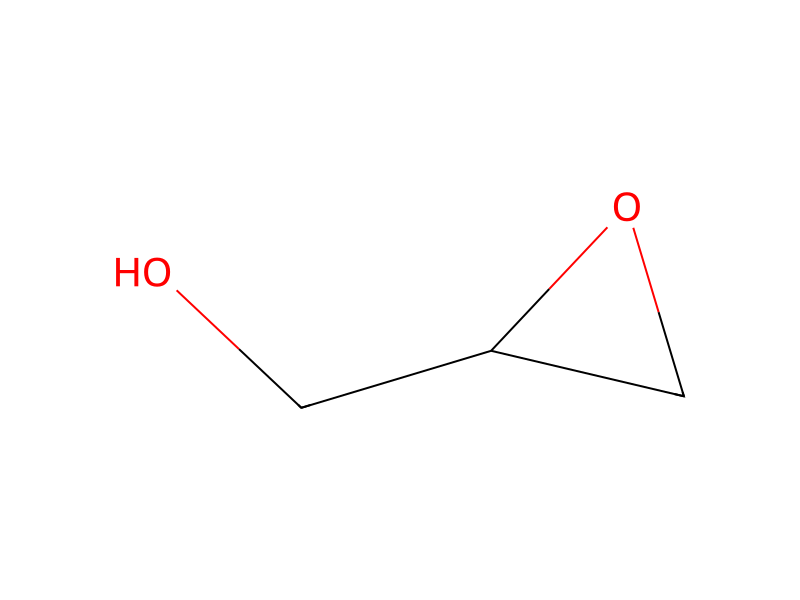



Conditions
- Temperature
- 150 °C
Procedure
Glycidol (8.88 g, 120 mmol) was placed in a baked Schlenk flask and heated to 150° C. A mixture of KOH (20 mg), hydroquinone (130 mg) and HEMA (2.6 g, mmol) was added to the glycidol over a period of 2 hours by means of a syringe pump. The reaction mixture was stirred at 150° C. for a further 2 hours. The product is obtained as a viscous brownish substance. However, polymer particles which are not soluble in the main fraction are formed during the reaction. These can also not be redissolved after the reaction.
Workup
- customThe product is obtained as a viscous brownish substance
- customare formed during the reaction
- dissolutionThese can also not be redissolved
- customafter the reaction
Sources & evidence
- ORD record
- ord-be48b475e0154166be2aa2c7d1e5ffee
- Source dataset
- uspto-grants-2015_03
- Patent number
- US08987410B2
Reaction notes
Loading…