Iodopyrazine → HCID 63968796, compound
Reaction equation

I[C:2]1[CH:7]=[N:6][CH:5]=[CH:4][N:3]=1.C([Mg]Cl)CCC.[Br:14][C:15]1[CH:16]=[CH:17][C:18]([F:23])=[C:19]([CH:22]=1)[CH:20]=[O:21]>C1COCC1>[Br:14][C:15]1[CH:16]=[CH:17][C:18]([F:23])=[C:19]([CH:20]([C:2]2[CH:7]=[N:6][CH:5]=[CH:4][N:3]=2)[OH:21])[CH:22]=1Participants
5
Reactant 3

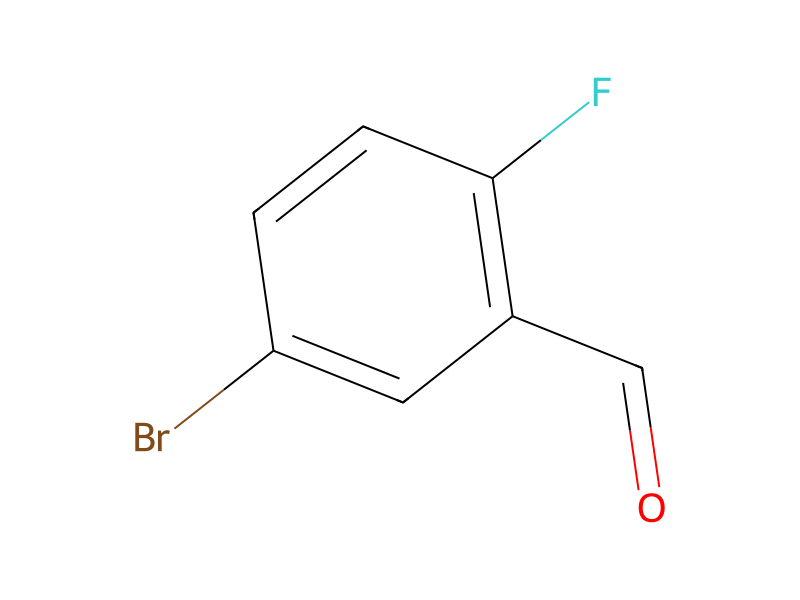

Product 1

Reagents, catalysts & solvents 1

Conditions
- Temperature
- 0 °C
Procedure
To an oven-dried flask was added anhydrous THF (60 mL) and 2-iodopyrazine (3 mL, 20 mmol). The flask was cooled to 0° C., and 2M n-butylmagnesium chloride in THF (11 mL) was then added dropwise over several minutes. The mixture was stirred at 0° C. for 30 minutes, and then 5-bromo-2-fluorobenzaldehyde (2.4 mL, 20 mmol) was added. After stirring for 2 hours at 0° C., the reaction was quenched with saturated aqueous NH4Cl. The aqueous layer was extracted with EtOAc, dried over MgSO4, and purified by column chromatography (gradient 0 to 50% EtOAc in hexanes) to afford the product. 1H NMR (400 MHz, CDCl3) δ 8.65 (s, 1H), 8.55 (s, 2H), 7.59 (dd, J=6.4, 2.5 Hz, 1H), 7.46-7.35 (m, 1H), 6.98 (t, J=9.2 Hz, 1H), 6.17 (s, 1H).
Workup
- stirringAfter stirring for 2 hours at 0° C.
- customthe reaction was quenched with saturated aqueous NH4Cl
- extractionThe aqueous layer was extracted with EtOAc
- dry with materialdried over MgSO4
- custompurified by column chromatography (gradient 0 to 50% EtOAc in hexanes)
- customto afford the product
Sources & evidence
- ORD record
- ord-f1dd90222787427c915247040a3b0744
- Source dataset
- uspto-grants-2015_03
- Patent number
- US08987250B2
Reaction notes
Loading…