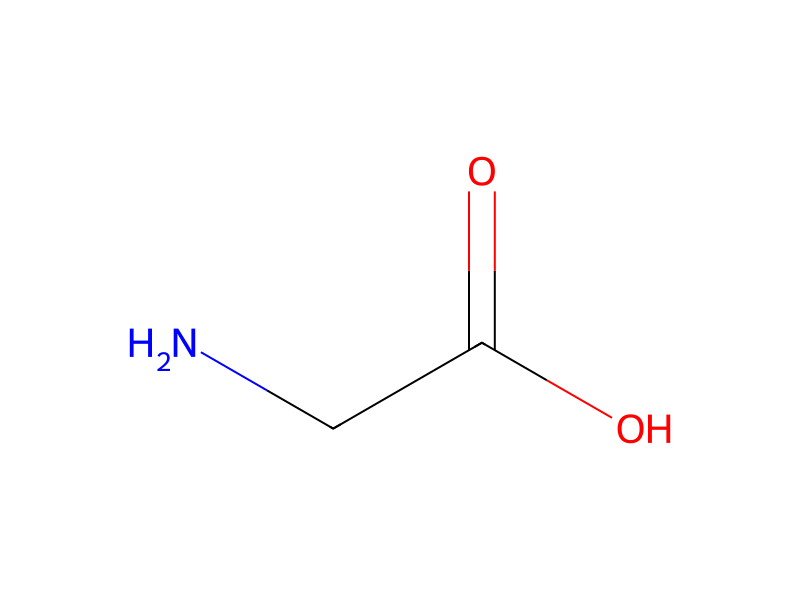
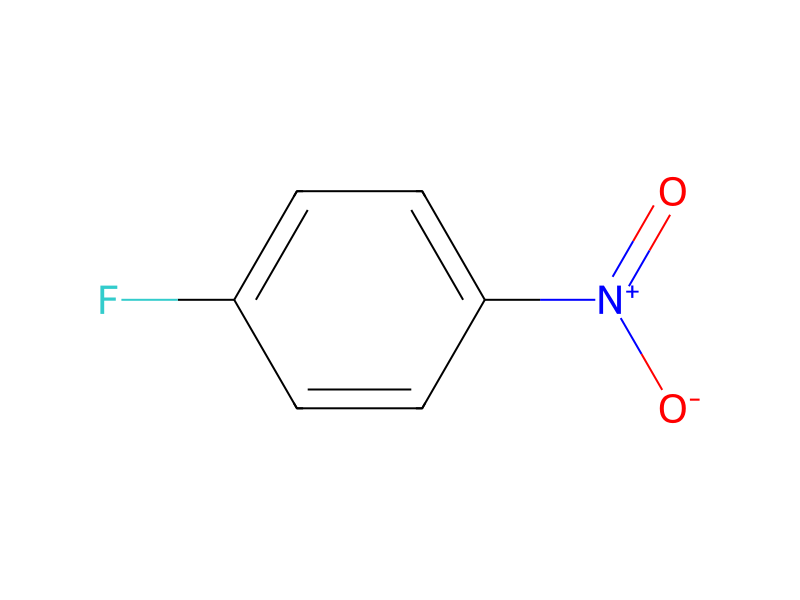
Glycine → Glycine, N-(4-nitrophenyl)-
Reaction equation

F[C:2]1[CH:7]=[CH:6][C:5]([N+:8]([O-:10])=[O:9])=[CH:4][CH:3]=1.[NH2:11][CH2:12][C:13]([OH:15])=[O:14].C(=O)(O)[O-].[Na+]>O1CCOCC1>[N+:8]([C:5]1[CH:6]=[CH:7][C:2]([NH:11][CH2:12][C:13]([OH:15])=[O:14])=[CH:3][CH:4]=1)([O-:10])=[O:9]Participants
5
Reactant 3

Product 1

Reagents, catalysts & solvents 1

Procedure
From 1-fluoro-4-nitrobenzene by heating with glycine at reflux in a mixture of aqueous sodium bicarbonate and dioxane to give (4-nitro-phenylamino)-acetic acid, followed by treatment with formaldehyde and formic acid at reflux to give [methyl-(4-nitro-phenyl)-amino]-acetic acid. Treatment with thionyl chloride and catalytic DMF to give the acid chloride followed by amide formation with 2-amino-4,6-dimethylpyridine in triethylamine and chloroform gives N-(4,6-dimethyl-pyridin-2-yl)-2-(4-nitro-phenylamino)-acetamide. The amide is the reduced with borane-dimethylsulfide in THF at reflux then catalytic hydrogenation over Raney nickel in methanol gives the required aniline.
Sources & evidence
- ORD record
- ord-9eac6e15186a41bfa6a029a63d5b929d
- Source dataset
- uspto-grants-2015_03
- Patent number
- US08993574B2
Reaction notes
Loading…